
How Sa7ten cooked for Al-Shati, delivered emergency water, and held space for life in a bombed school.
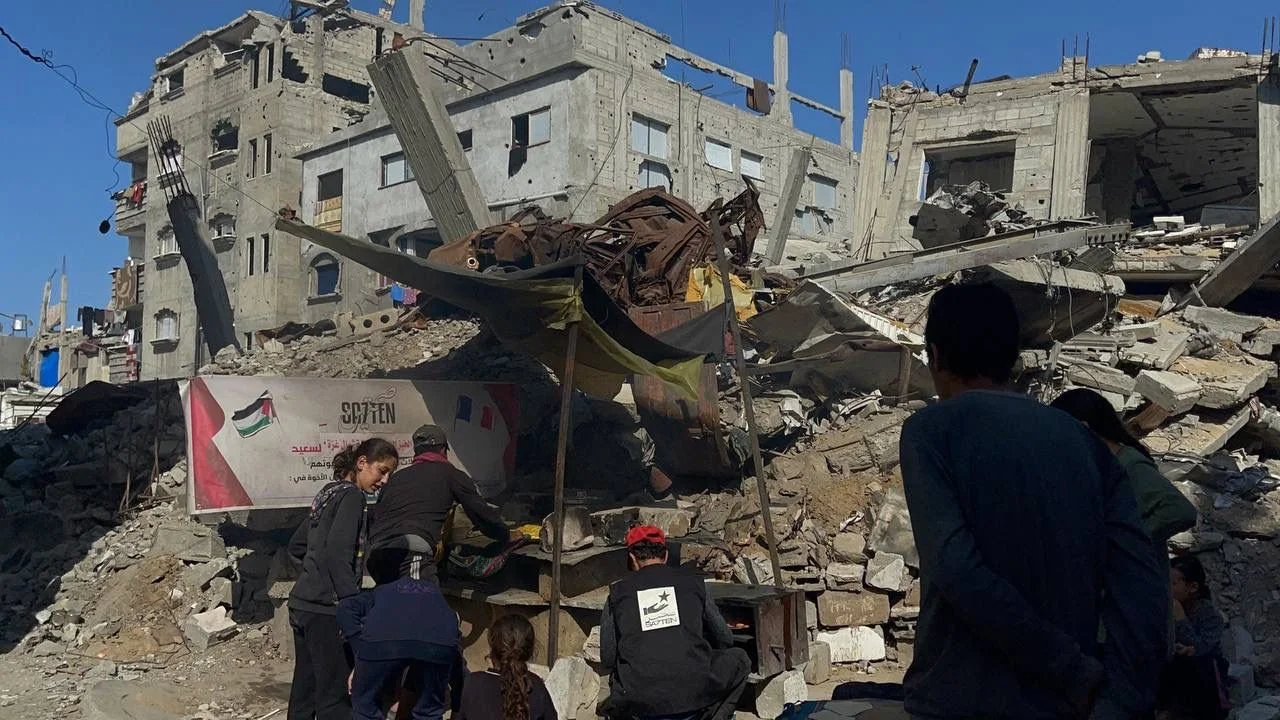
On a winter Saturday in Al‑Shati, while the world negotiated yet another ceasefire the Israeli occupation would break by nightfall, Sa7ten’s team moved through streets flooded with sewage and rainwater to cook a communal meal, distribute water, and hold a Madih/(Prophetic Praise), evening. Nothing about the day was symbolic. It was a response to a reality engineered to erase life.
The neighborhood, already shattered by months of bombardment, carried new scars. A school that once held prisoners for the occupation had been bombed in the last invasion. Families displaced by the assault were now living in its classrooms. One of Sa7ten’s younger team members, sheltering there with his family, had just welcomed a baby boy. What began as his wish to hand out a small pot of Balila for the newborn became, through discussions among the team, a decision to host an evening that could briefly stitch the torn life of the neighborhood back together.
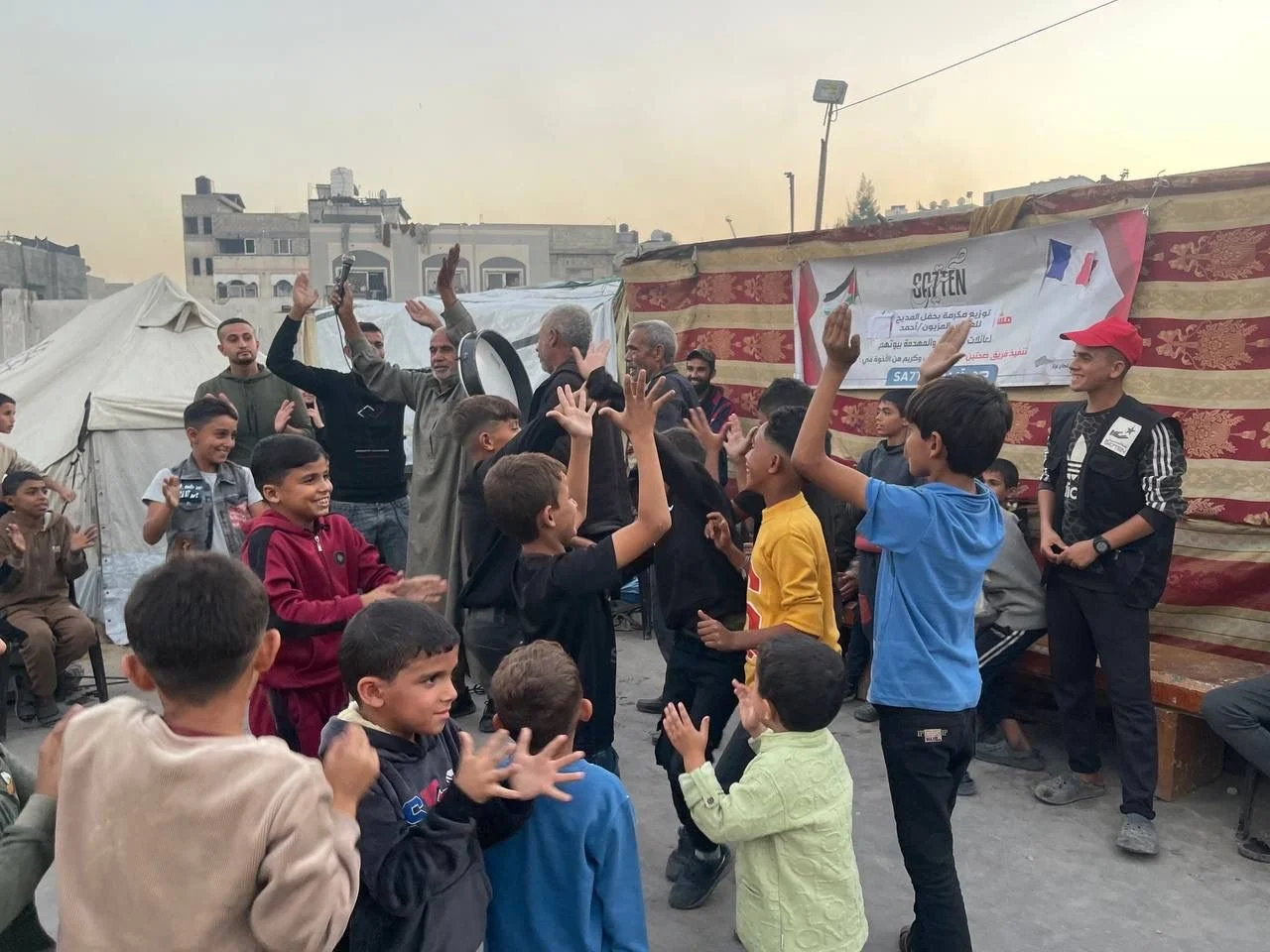
“We said, why not hold a Madih/(Prophetic Praise),” Mohammad, Sa7ten’s field manager recalled. “Invite the people, let them eat, let them feel a moment of ease.”
But Gaza leaves no room for linear planning. Conditions dictate every choice, every meter traveled, every fire lit. What was supposed to be open‑air cooking turned into a scramble for shelter when heavy rain broke over Al‑Shati and the streets began to swell. Gaza has no drainage network; water accumulates instantly, carrying debris, waste, and the cold straight into homes and tents.
A neighbor whose house had been bombed offered his canopy. Cooking under the ruins of someone’s life has become ordinary in Gaza – not because people accept it, but because the alternative is hunger.
A Street Without Water
Midway through preparations, the team asked neighbors for water to start cooking. What they found was worse than scarcity. “You came needing water for cooking,” Mohammad said, “and there is none. And drinking water is unavailable to the residents of the neighborhood.”
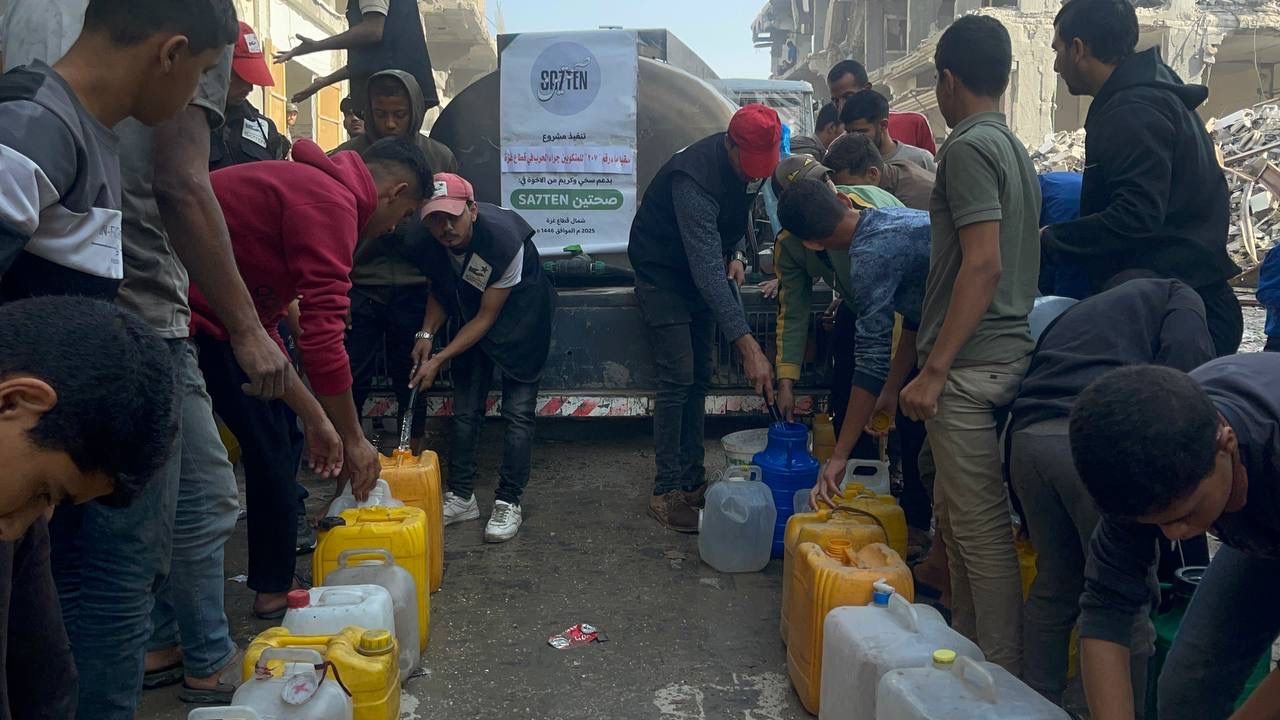
War does not only bomb homes; it dismantles the systems required to survive even a normal winter day. Wells are bombed. Pipes are shattered. Water trucks, when available, are too expensive for most families. The occupation’s control over crossings means thousands of aid trucks – including water and purification supplies – sit blocked.
Two water trucks were secured with urgency. Each carried 6.5 cubic meters of water. Families lined the street with whatever containers they could find. The trucks emptied fast. “If we had five or six trucks,” Mohamad explained, “we might have covered the needs of only this street.”
Sa7ten took less than 200 liters for the meal — just enough to keep the cooking safe. The rest went straight into people’s hands.
Cooking on Broken Ground
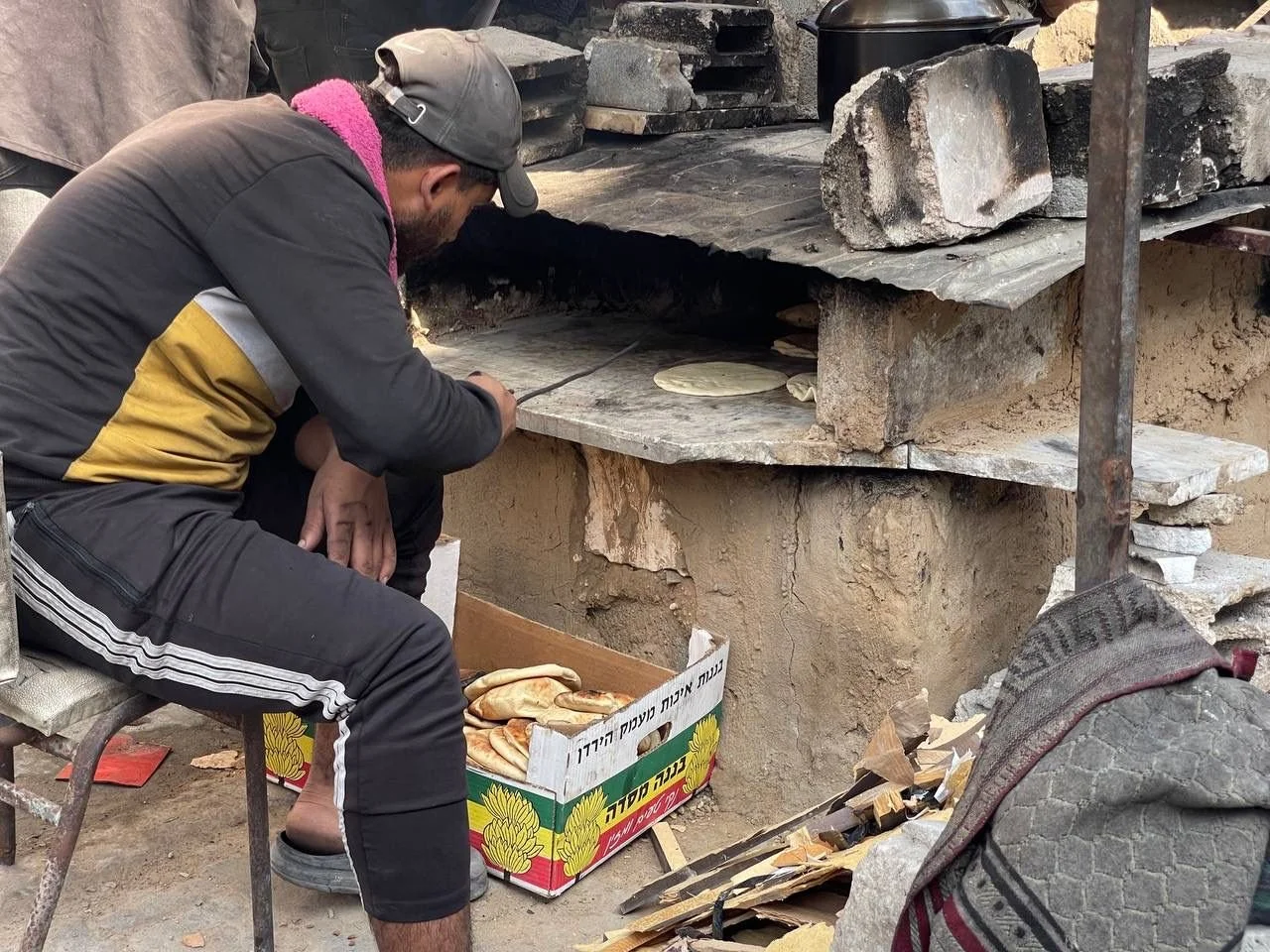
The team had planned the meal days earlier: eight pots of Rumaniyeh, a dish that brings people together in Gaza’s hardest winters. Ingredients were purchased. Pots were rented. Firewood arranged. But the rain turned everything into a crisis. Volunteers took more than two hours to reach the cooking site, carrying spices and supplementary items on foot. Transport nearly collapsed.
Phones died because there was no sunlight to power the solar panels everyone relies on. A banner prepared for the event could not be printed. Still the meal was cooked. Still people gathered.
A Community in the Rubble
The Madih/(Prophetic Praise) evening was held in the same bombed school. Elders, women, young people, and children arrived early, soaked but determined not to lose the evening to the storm. The Madih band set up as best they could. Chairs were placed on wet ground. When the team was delayed by flooding, guests began the ceremony themselves.
It was not a celebration. It was a declaration: we exist, even here, even now.
One team member described the moment with urgency rather than triumph. “You cannot stop a whole project after planning for days. Canceling means losing everything. And the people were already sitting there.”
Winter as a Weapon
The rain revealed what the siege and the genocide have engineered: exposure as a form of violence. Mohammad spoke of families who “stayed in the water for nights in the cold,” about children whose suffering never reaches cameras.
He described tents that last only two or three months; fabric erodes fast when it is the only barrier between a family and winter. He described large families with more than ten children, their mothers killed, their shelters collapsing.
He also spoke of anger toward those who turn Gaza’s pain into content: “Some people only look for the trend… He wants to trade with the cause; for him, this is business.”
The Work Ahead
Sa7ten’s upcoming plans are shaped directly by what the team witnessed that day:
Expanding water distributions in neighborhoods where people have no drinking water at all.
Repairing a bombed well in Al‑Shati to restore water for domestic use.
Launching a winter protection project, focused on:
tarps (shawadir) to reinforce torn shelters,
replacement tents,
winter clothes for children, especially jackets and pajamas.
Increasing field visits to households in the harshest conditions.
Every plan emerged from conversations with people on the ground asking, “When, for God’s sake, will you look into it?”
Beyond Humanitarianism
No humanitarian framework – not the UN cluster system, not large NGOs with rigid mandates – is built to respond to genocide. Their language folds brutality into procedure. Their timelines cannot hold a people forced to rebuild their shelters every two months.
What happened in Al‑Shati is not a humanitarian snapshot. It is the lived reality of a people resisting disappearance.
International and regional powers have already failed Gaza. They have watched the occupation starve, bomb, and dehydrate a population and have responded with silence, procedural caution, or performative outrage. If this were happening in a European backyard, would they still debate how many tents are allowed to cross a checkpoint? Would they wait for a viral video before demanding water for families drowning in the cold?
What Sa7ten does is not charity. It is the work of people refusing to let Gaza be reduced to an empty line on a map. It is a practice of dignity, carried out under bombardment and rain, using whatever materials survive the siege.
Gaza continues to show the world that humanity is not a slogan. It is a daily act. A shared meal under the canopy of a bombed house. A water truck arriving in a street abandoned by the world. A Madih that rises louder than drones.
Liberation is not an abstraction here. It is the reason people continue to cook, gather, sing, and bury their dead without surrendering their place on the land.
Sa7ten will keep moving – through flooded streets, under shattered roofs, in defiance of a system designed to erase life – as long as there are people standing with Gaza in real terms. This is not a question of aid. It is a question of presence, responsibility, and refusing to normalize genocide.
