
How consistent field action built trust and prompted vital institutions in Gaza to seek collaboration.
The ceasefire in Gaza was presented to the world as a pause in violence. On the ground, it never functioned as one. Israeli occupation forces repeatedly breach ceasefire terms, carrying out attacks that kill civilians, keep large areas unsafe, and continue their program of ethnic cleansing and genocide. Reports by Al Jazeera and other credible media outlets have been documenting hundreds of violations and the killing of hundreds of Palestinians after the ceasefire was declared.
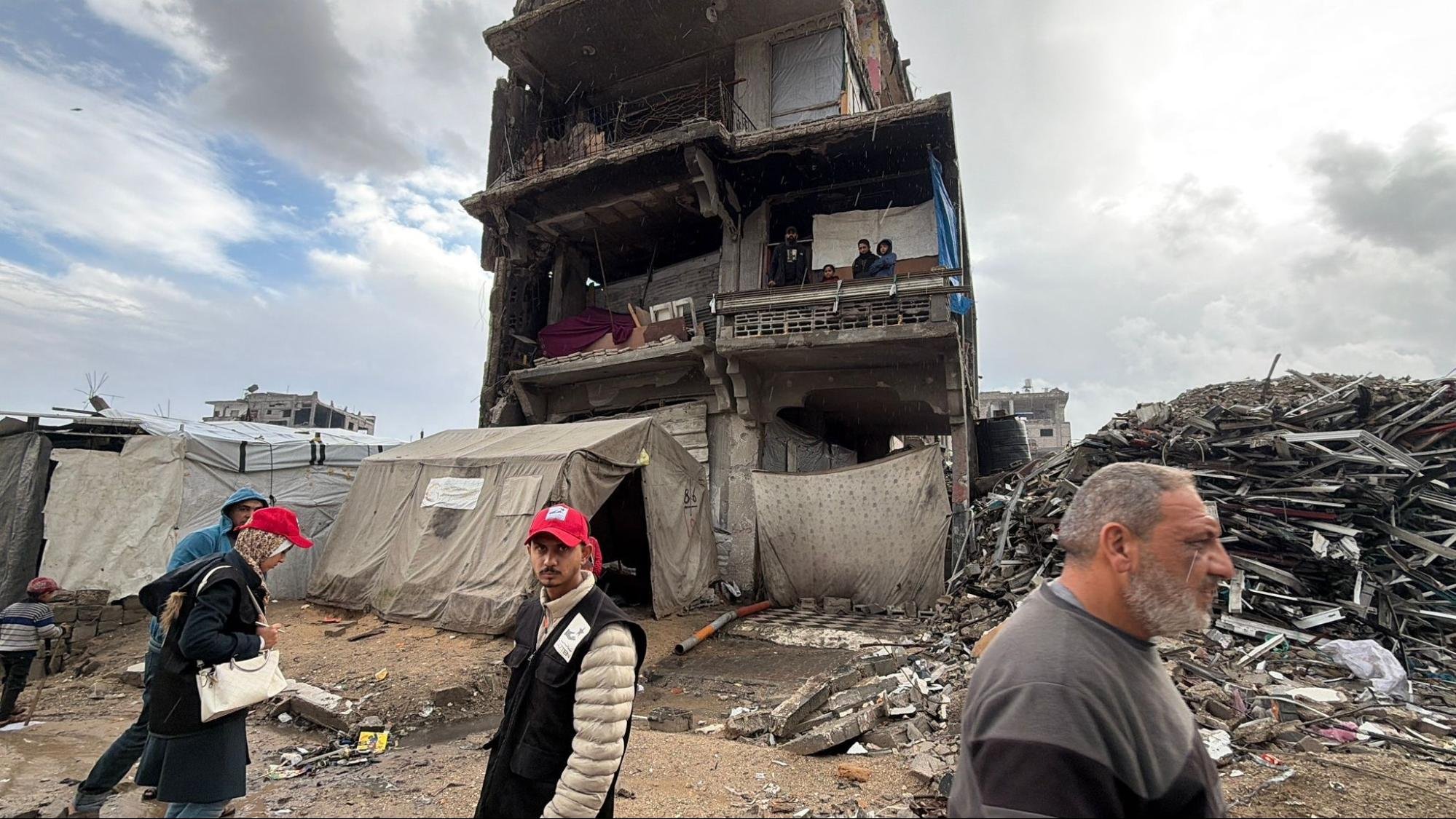
Yet the violence has not been limited to bombs and bullets. It has taken another form: the deliberate restriction of aid, the prevention of essential materials from entering Gaza, and the continued denial of proper shelters, caravans, and winter supplies. What followed the so-called ceasefire was not just exposure to further violence, but also to cold, hunger, flooding, and untreated illness, with winter presenting a new set of daily threats.
In this reality, Sa7ten mobilized immediately with the donations we received from our generous donors. Our actions were guided by direct field assessments and by community channels built over the course of many months: networks through which people reach us, report their conditions, and request help when no other doors open. What followed was not just a mere list of projects - but a highly coordinated program of survival efforts and unabated steadfastness carried out under siege.
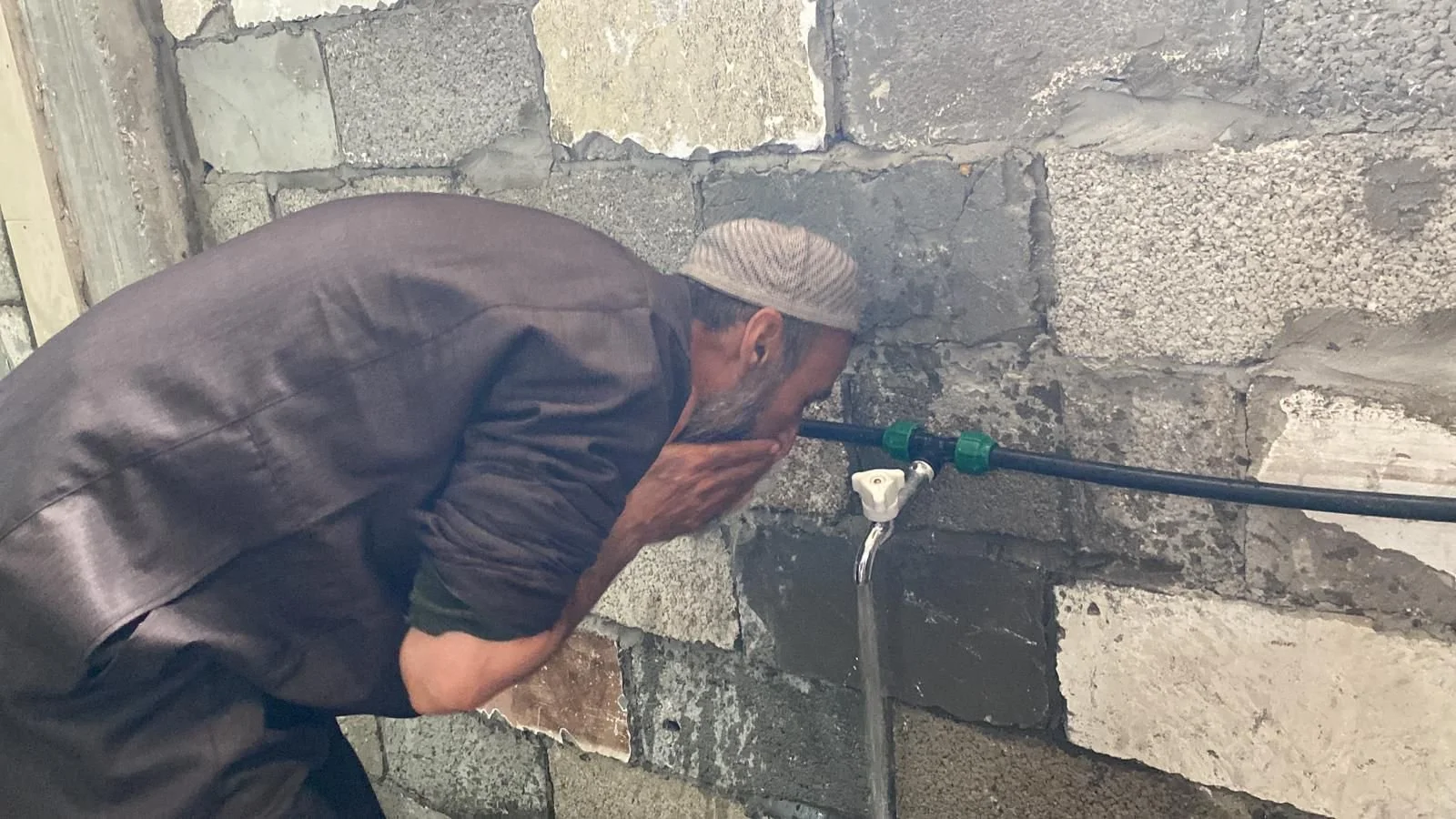
A Basic Need, and a Social Anchor: An Ablution Area, Essential to Gazan Spiritual and Social Life
Our first on-the-ground response addressed a need that was both practical and deeply human, and essential to the social and religious fabric of Gazan life. Displaced families had no clean or dignified space for ablution, a daily practice tied not only to worship, but also to personal dignity. On 1 December, Sa7ten’s team began work on an ablution area serving a local mosque. Materials were scarce. Cement was unavailable. Electricity was unreliable.
Despite this, the team installed a water network, closed and secured surrounding walls, and painted surfaces where proper plastering was previously impossible. The space was completed and officially opened just 4 days later.
“This was not about construction,” one team member said. “It was about giving people a place where they could stand clean, even when everything around them was collapsing.”
Blankets in a Winter That Offers No Mercy
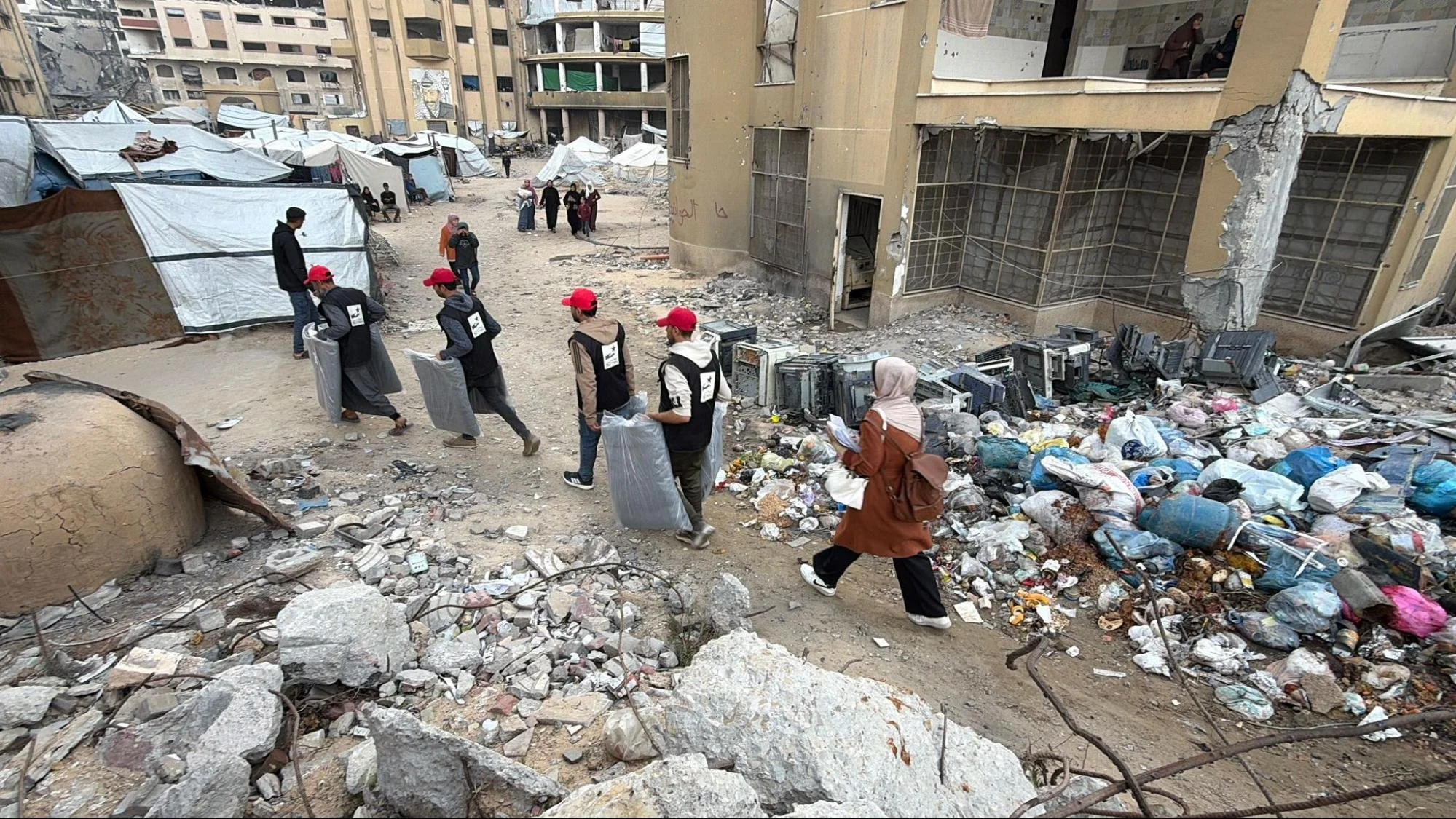
For Gazans, winter is not a seasonal discomfort – it is a looming threat to life. Field visits showed families living in tents that provide no protection from rain or cold. Children slept on soaked bedding and elders were left with no place to rest.
Faced with this conditions, Sa7ten launched a blanket distribution in two phases:
Phase One: 2 December
Phase Two: Beginning 5 December
Across both phases, 700 blankets were distributed to families identified through direct assessment. Securing the blankets was itself a struggle. Supplies were scarce, prices unstable, and movement between markets difficult. Despite these constraints, blankets were sourced from multiple merchants, prepared centrally, labeled, and transported using a contracted bus to overcome mud-filled roads and blocked streets.
“Our work is not random,” Sa7ten’s field coordinator explained. “We go where the need is hardest. We prioritize the families who cannot survive another cold night.”
The blankets helped - but they are not enough. Field assessments made clear that the real needs remain unmet, particularly for proper shelters, winter clothes for children, tarps to seal torn tents, and heating materials, all of which are largely barred from entry into besieged Gaza.
Cooking for Dignity: Restoring a Sense of Normalcy Through Food
Amid the urgency of the winter response, the team identified another issue: the lack of protein-rich food. Many people, including members of our team themselves, had not eaten chicken for at least two years.
Rather than distribute only dry/nonperishable staples - we chose to cook.
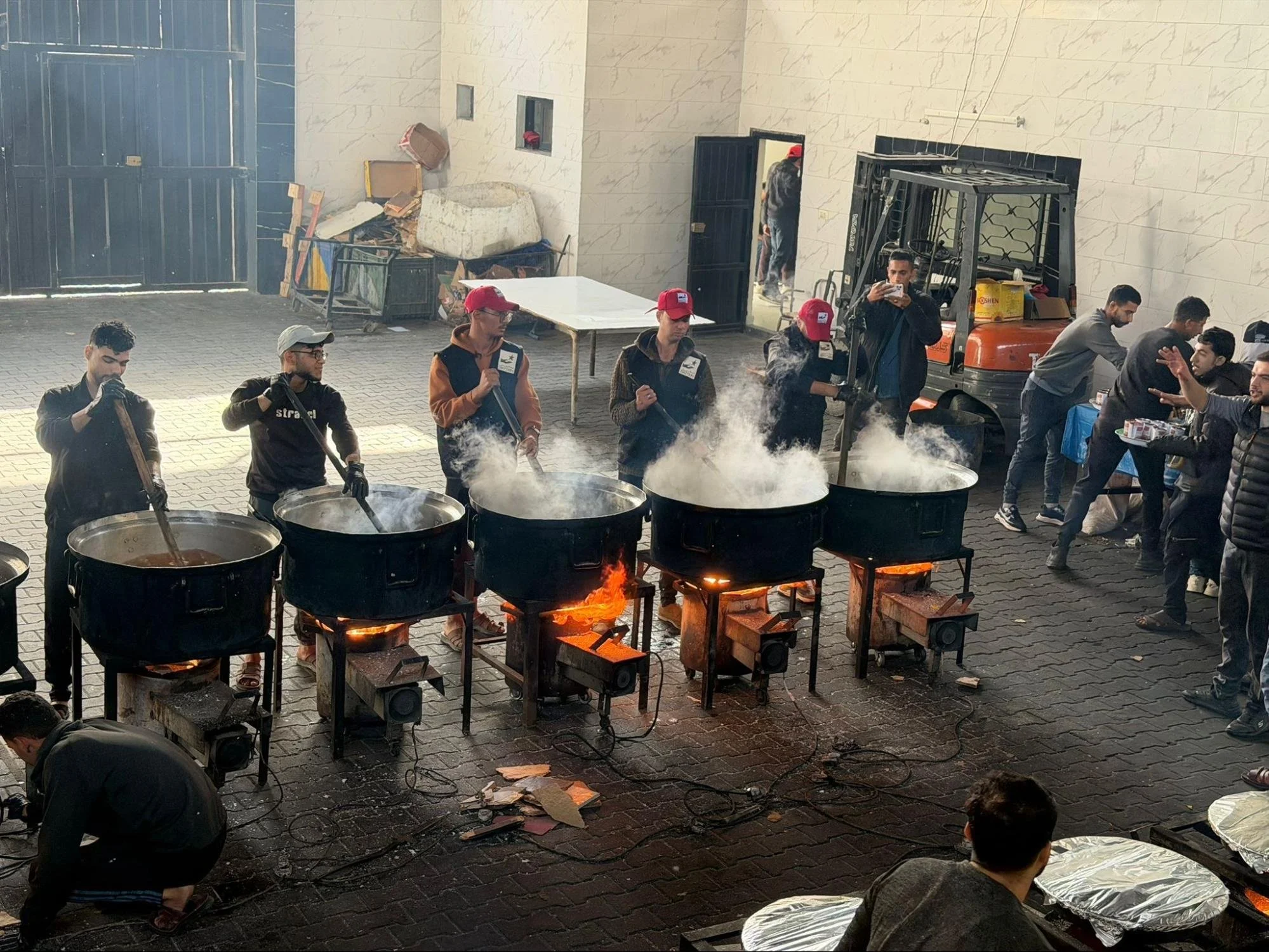
On 8 December, the team secured access to a professional kitchen and sourced 60 chickens, along with rice, pasta, vegetables, and spices. Preparation began days in advance. On the day of distribution, 13 large pots were cooked - eight of rice and five of pasta - serving hundreds of people.
“We wanted to give something that reminded people they are human, not just surviving bodies,” a Sa7ten volunteer said. “We cooked with care because Karama (dignity) matters.”
Our dedicated Gaza team mobilized with approximately fifteen team members contributing to preparation, cooking, plating, and distribution.
Blood Donation: Community Care Under Fire, and the Trust That Enabled Institutional Collaboration
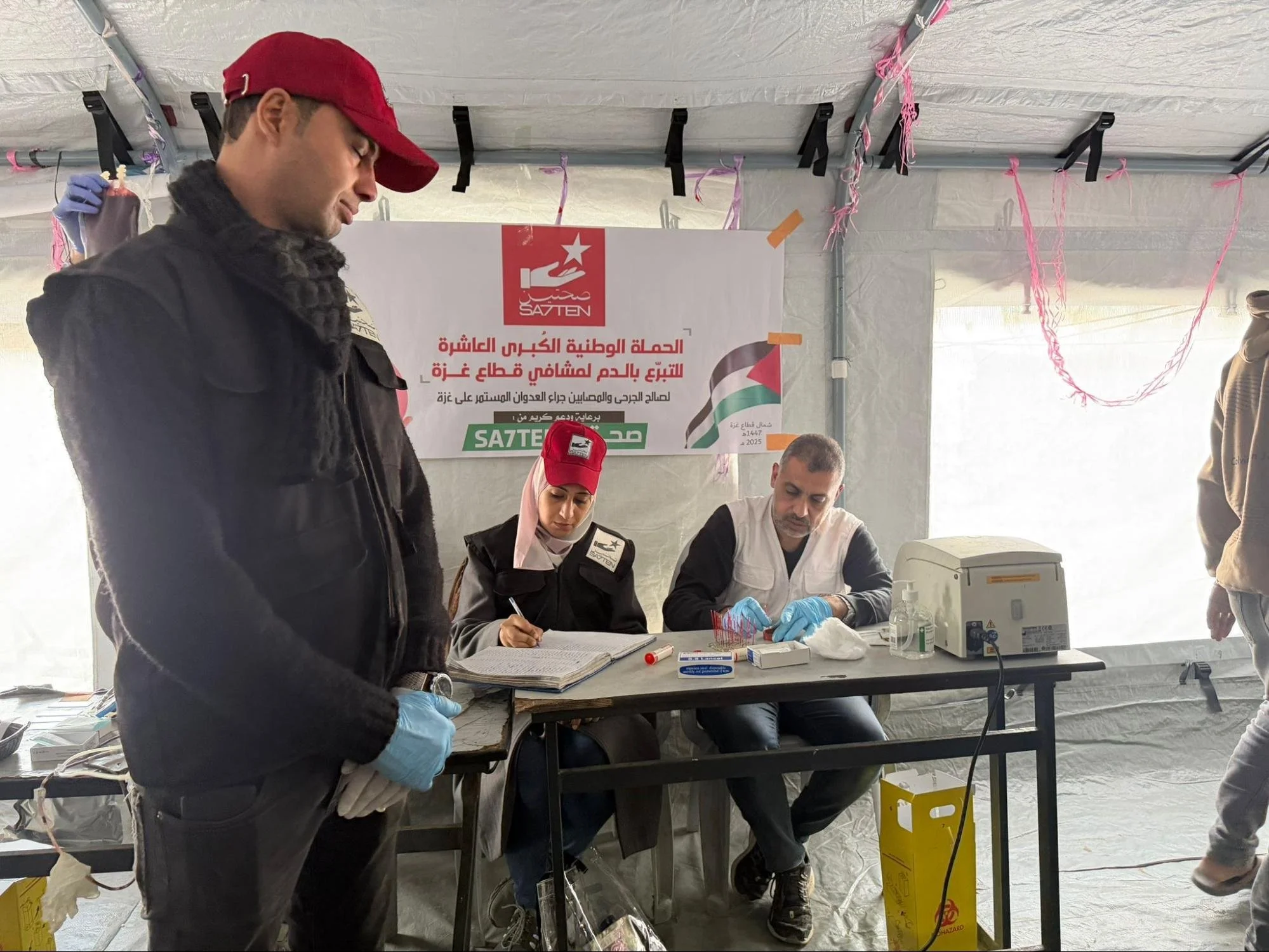
On 9 December, Sa7ten organized a blood donation campaign in coordination with Gaza’s Central Blood Bank. Initial arrangements at one camp could not be executed due to lack of electricity and coordination. Rather than cancel, the team relocated immediately and restarted the operation from scratch.
Volunteers moved from tent to tent, informing residents of the campaign directly. We supported the Gaza Blood Bank medical staff, welcomed donors with respect, and maintained their privacy throughout the donation process.
The result was the collection of more than 50 units of blood – a number medical staff described as exceeding what is often achieved by far larger organizations with much greater capacity. Through this and similar operations, Sa7ten has established itself as a trusted and reliable actor, prompting vital institutions in Gaza to reach out directly, coordinate with the team, and seek our collaboration in moments of acute need.
“People donate because they trust us,” Sa7ten’s team leader said. “Trust is built by being present when things fall apart.”
Storms, Flooding, and Emergency Food Parcels
When severe storms hit Gaza in mid-December, tents flooded and families were left with soaked bedding and no dry shelter. Infants and children were among those most at risk. Reports confirmed that at least 15 people died because of the cold.
On 13 and 14 December, Sa7ten distributed emergency food parcels - the largest parcels we have ever delivered. Each contained around 20 essential items, including olive oil, rice, pasta, sugar, tea, and cheese.
Families received parcels within hours of submitting appeals to Sa7ten.
“One hour earlier they were telling us water had entered their tent,” a Sa7ten’s field worker said. “Two hours later we were at their door.”
What Comes Next: Winter Clothes and Shelter
Field data shows that the most urgent unmet need remains winter clothing for children. Sa7ten has identified more than 500 families requiring our immediate support. The minimum cost to meet this need is $15,000.
Shelter, however, remains the most critical gap, as proper tents and caravans have been largely blocked from entry. Providing adequate shelter to even 100 families would require tens of thousands of dollars – resources far beyond what grassroots teams can mobilize alone.
Beyond the Ceasefire Narrative
Gaza today needs more attention than ever. The people here withstood (and continue to withstand) a brutal genocidal campaign. What followed was not relief, but neglect, restriction, and continued violence by other means.
International actors speak of ceasefires while allowing violations to continue unchecked. Aid frameworks remain rigid and inadequate. What people actually need – shelter, warmth, food, safety – is delayed, denied, or reduced to statistics.
Sa7ten will continue to respond with what we have. We will assess, move, distribute, and stand with our people as long as need exists. But of course, this requires your support.
“Our people deserve every penny and every minute we can give,” Sa7ten’s operations director said. “Remaining steadfast in the face of genocide is not a slogan – it is daily work.”
And that work continues.
