
“It Was Enough That the Answer Was Yes”
Sa7ten Brought Back a Glimpse of Eid Joy to Gaza’s Children-Even if Just for a Moment
Gaza, June 6, 2025
“It was enough that we brought joy to a child who said: ‘Dad, I want new clothes for Eid.’ It was enough that the answer, this time, was yes.”
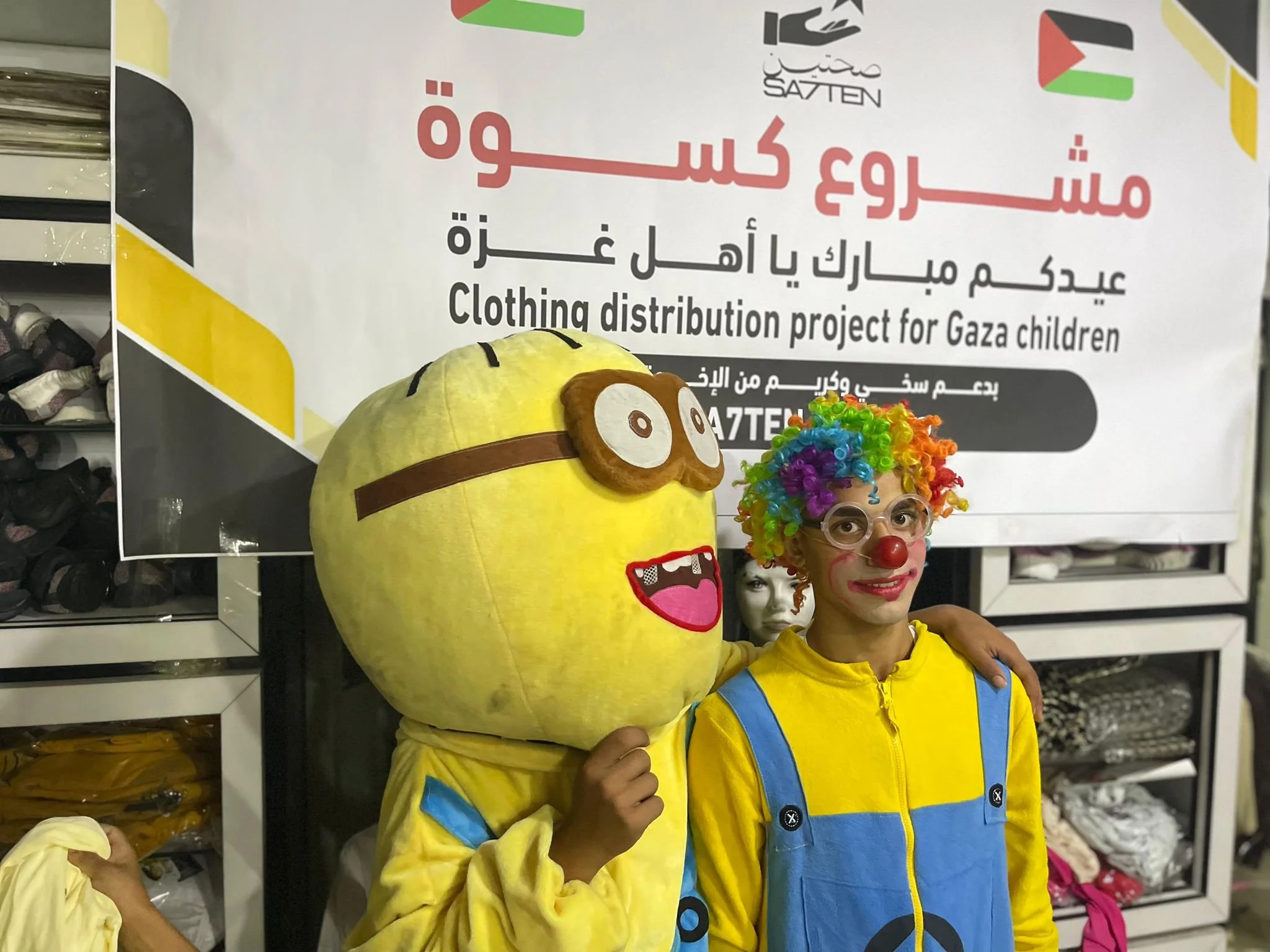
In a moment where the world closes in on Gaza from all directions- siege, war, displacement, hunger- something as simple as a new shirt can mean everything. For hundreds of children whose lives have been shattered by bombs and trauma, the ability to walk into a real store and pick something they like, walk out with dignity, joy, and a sense of self-worth was not just a gift- it was a necessity.
This Eid al-Adha, we carried out a large-scale clothing distribution initiative across the west and central regions of Gaza. But this was not just any aid drop. It was carefully, humanely designed to bring back to Gaza’s children a stolen fragment of joy. It was about choice, dignity, and presence.
The team intentionally selected Al-Huwaiti Commercial Store, a three-story building stocked with clothes for women, men, and children. It wasn't a warehouse. It wasn’t a tent. It was a familiar, respected space that affirmed something Gaza’s people are rarely offered: a normal shopping experience. The children walked in- not as numbers on a list, but as kids excited to find a shirt they liked, a sandal that fit, a color they loved. It reminded them, even if briefly, that they were still children.
When Even Eid is Out of Reach
But make no mistake: this joy was reclaimed in the middle of devastation.
“There’s no flour,” said Ahmad, Sa7ten’s Operations Director. “Forget chocolates. Forget meat. There isn’t even flour.” In Gaza today, a universal joy like Eid al-Adha has become unreachable for thousands of families. The occupation doesn’t stop at borders or bodies- it chases Gaza’s people through memory, tradition, and time. Even a sacred occasion that belongs to every Muslim, everywhere, is smothered under bombs, siege, and impossible prices.
Imagine telling a child there’s no new clothes this year. And not because you're busy or forgot- but because there is nothing to buy. Or worse: because a single chocolate bar costs $15–20. Families had to choose between diapers and sweets, between clean water and a moment of celebration.
In this climate, even less than a clothing drive- like handing out candy or toys- was too expensive to consider. “We thought of planning events, contests, performers for the kids,” said Abu Salah, “but we couldn’t even afford the most basic giveaway item.”
And yet, they pushed on.
From the Streets to the Store: Organizing Against All Odds
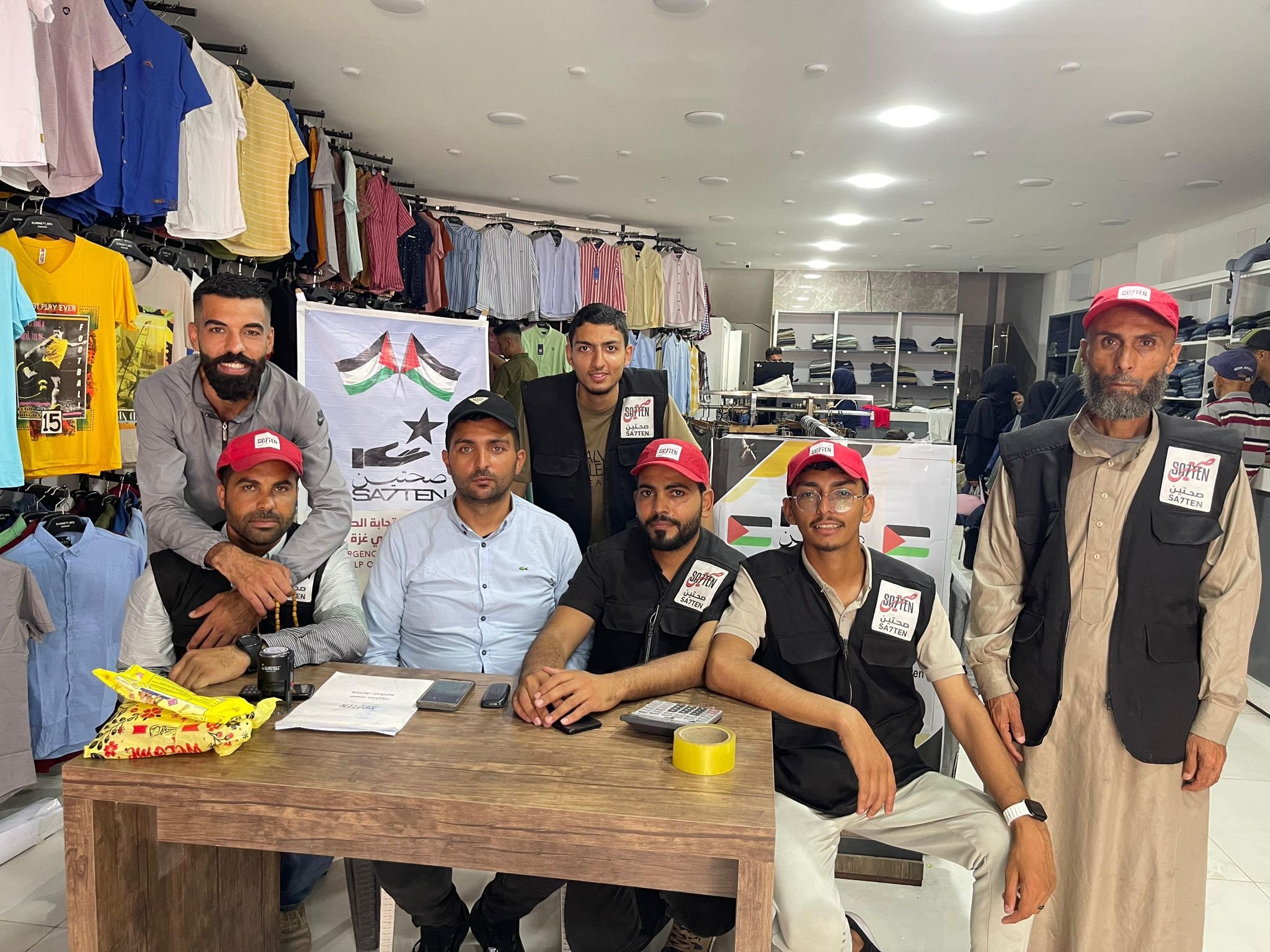
It wasn’t easy. The team scouted dozens of shops before finding one that was appropriately stocked. Many stores had nothing- or nothing suitable for Eid. Some had housewear instead of festive clothing. Others were too small to accommodate crowds. When we finally found the right location, they had to navigate three packed floors and organize movement under pressure from hundreds of eager families.
On Day One alone, over 250 families showed up, most with multiple children. The families reached were largely those of martyrs, the wounded, and displaced communities. But in the midst of it all, others began arriving unregistered. Some came with nothing but the clothes on their back.
“We didn’t turn a single one away,” said Abu Salah. “Even if they weren’t on the list. Even if we hadn’t accounted for them. We took that on ourselves. We gave. And we trusted God.”
Some families received shirts, others pants, sandals, or belts. Every item was handed with love and attention. And every child left with something- not just clothing, but the memory of being seen.
A Commitment That Goes Beyond the Occasion
This wasn’t just about Eid. This was about being present when the world turns away. Our work didn’t end when the store closed its doors. It continues, quietly, amid exhaustion and grief, and in the cracks of a society holding on through war, loss, and relentless pressure.
“There’s a fatigue in people’s hearts,” said Ahmad. “But still- we’ll be with them, every time we’re able. Every time we can, we’ll show up.”
Future plans are already being discussed- contingent on what little funding and safety remains. If the war pauses, they hope to bring clowns and musicians to the streets, prizes and games for children who haven’t played in months. “If the skies clear, even briefly,” Abu Salah added, “we’ll bring back the sound of celebration.”
“The word ‘flour’ summarizes it all. If there’s no flour, you know there’s no meat. No sweets. No Eid.”
That sentence, repeated like a warning, like a surrender, hangs heavy in the air. It means: there’s no cake, no sweets, no meat, no chocolate, no celebration. No Eid. No life.
And if the world hears anything, let it hear this: a brutal, unrelenting occupation has stripped Gaza’s people of even the smallest joys. These families are not asking for miracles. They are asking to live. They are asking that this war stop chasing their children into their dreams, into their play, into their holidays.
The world has remained too silent, too still.
It is time to move the pieces.
It is time to act.
It is time to help lift this war off our people- before even memory becomes something they cannot afford.