
This tribute comes from the words of those who stood beside him. The Sa7ten team on the ground in Gaza. The ones who knew Akram Rajeh before the photos. Before the headlines. They worked with him. Laughed with him. Buried him. This is built from their voices. Their memories. What they carry now.
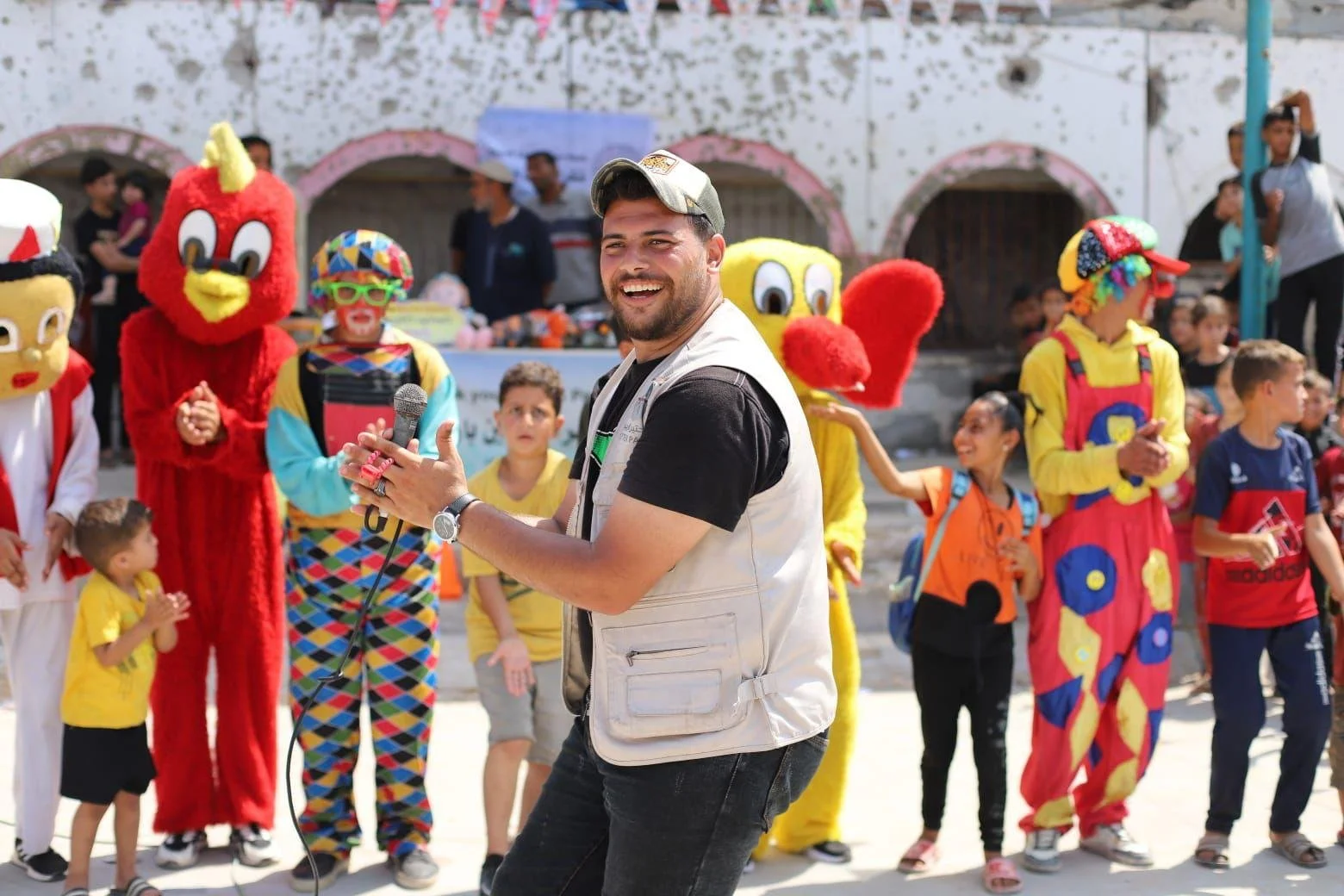
Akram Rajeh, in one of the Eid events in Gaza, 2024.
Akram Rajeh was a father. That's truth number one. A father. A neighbor. A brother among brothers. He didn’t ask for credit. Didn’t need to. “A young man you could count on when needed,” they said. He showed up. Always. “Okay, I’m with you.” No hesitation. He made things happen. Kept things together. Carried more than his share. They called him “the Engineer.” Engineer Akram. He took it seriously. Behind the camera. Behind the logistics. Behind the scenes. And somehow always at the center of it.
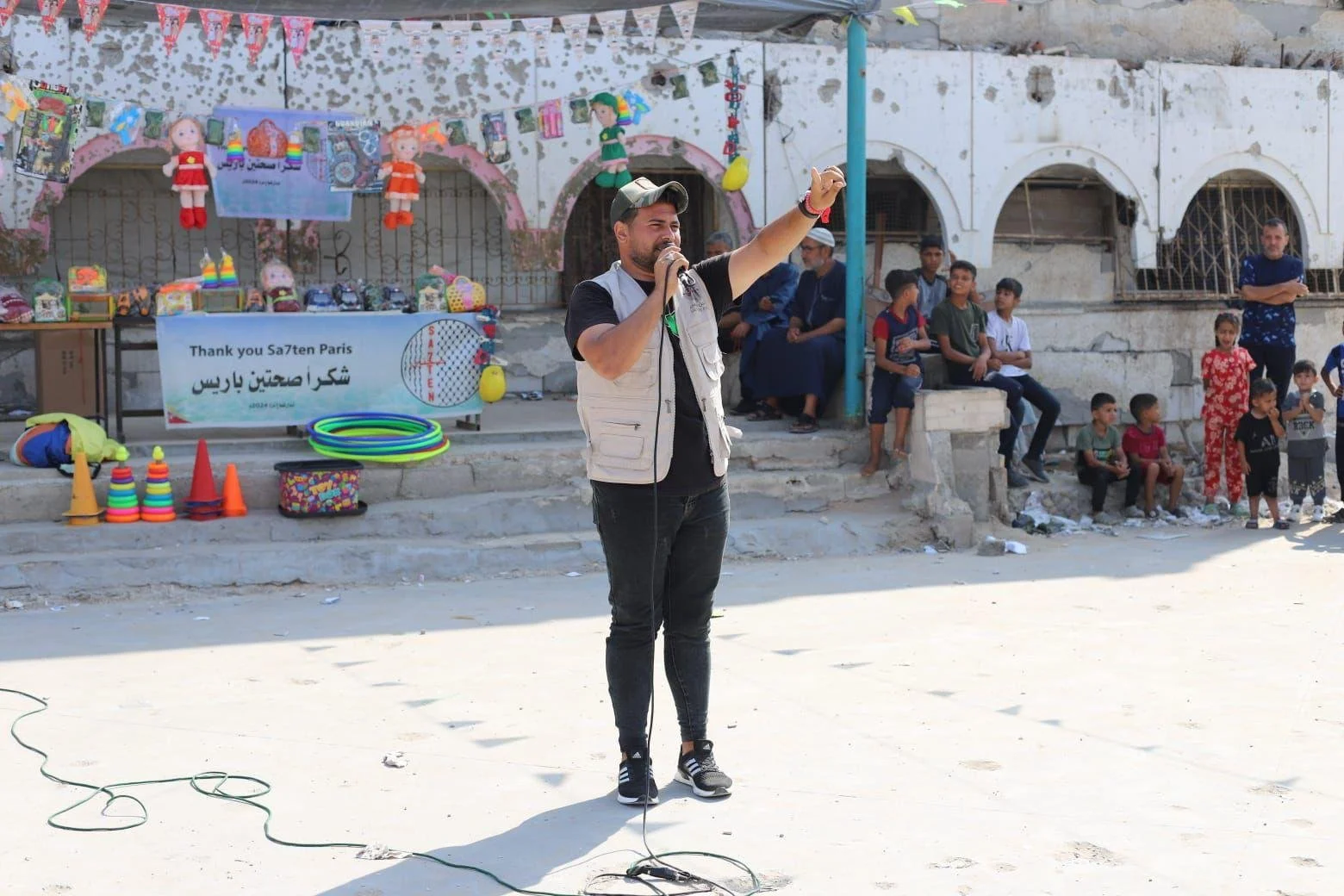
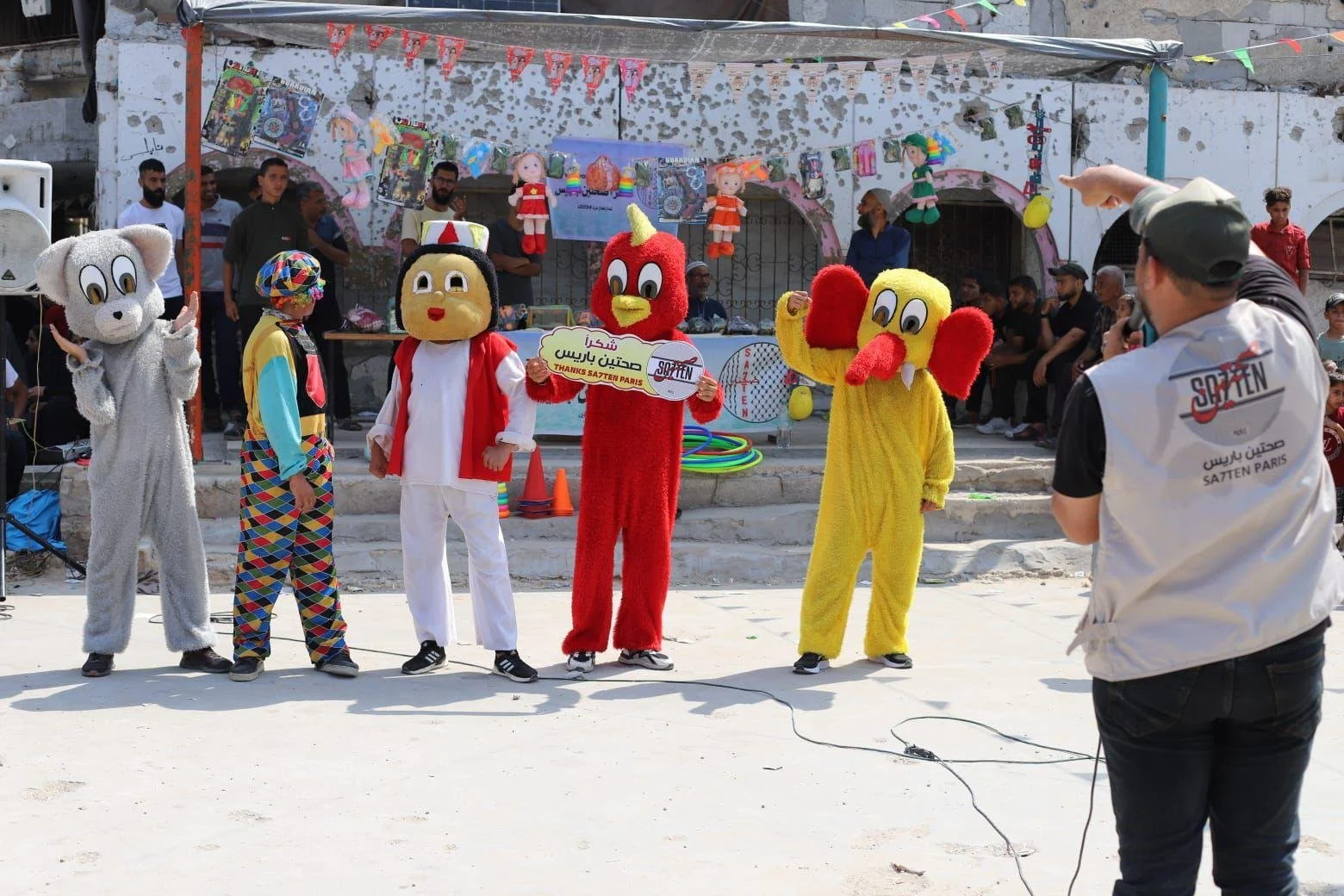
Last year, ten days before Eid al-Adha, he ran a celebration for the children. At the school. “He drew a smile on the faces of the children in a big way.” Games. Gifts. Songs. Laughter. It worked. And then he was gone. Ten days later. Martyred.
I didn’t know Akram. But I remember crying when a colleague at Sa7ten shared his photo with me. That smile. It undid me. It wasn’t loud. It wasn’t messy. It was a quiet, steady kind of crying. The kind that softens your fists. That pulls the anger from your chest and replaces it with something still and sharp. I carried his face with me all day. His laugh on my chest. I spoke to people as if I had just talked to him. As if I was introducing him to the world outside Gaza. The world that only sees Gaza in shaky footage and flattened headlines. Every act of life in Gaza is a fight. Because genocide is vast. Indiscriminate. You push back however you can. With whatever you have. The important thing is to keep pushing.
They called him a Mujahid. Not a title. A word with weight. It comes from jahada. To struggle. In Gaza, that word still means what it’s supposed to. “A Mujahid in the field, a Mujahid in serving people.” Someone who stands up. Holds ground. Gives everything. That’s what he did. “He was a Mujahid on all levels.” The West turned that word into something else. But here, it still means your friend. Your cousin. The boy next door.
He was there from the start. “Working with us behind the camera… in our beginnings.” He wasn’t extra help. He was the backbone. “Before being part of the team, he was from the neighborhood and the area, and our friend.” It wasn’t work. It was life.
Akram was killed in Shuja’iyya. On the front lines. “He was martyred as a Mujahid.” A month before that, Ziad Abu Khdeir was assassinated. With his wife. His son. “Because he was a person the Zionists didn’t like. Someone who annoyed them.” That’s all it took. Ziad was the one who built the camp’s structure. Talked to the merchants. Filmed the appeal. “He was my right arm,” someone said.
Then there was the Rajab photographer. “Worked with us on four filming activities.” Not well known. But maybe better than all of them. “Unknown on Earth. Known in the sky.”
They are gone. One by one. “Even if one person is martyred from our team every day, its journey will continue.” That’s what someone said. The team isn’t just people. It’s an idea. “And an idea never dies.”
Their loss doesn’t fade. “His conversation remains. His words remain,” one of them said about Akram. “You read the words and feel… these are people who are truly righteous. Not attached to this world. People who had already made their choice with the divine.” And when you look back, you see it. You see what they saw all along.
This isn’t an obituary. It's an acknowledgment. For Akram. For Ziad. For the Rajab photographer. For the others who had no chance to say goodbye. And for the ones still standing: “We are all on this path, my friend. We are all on this path.”