
After Eid, the Sa7ten team in Gaza delivers water, joy, and defiance, refusing to pay for permission to help their own people.
Gaza, June 10, 2025
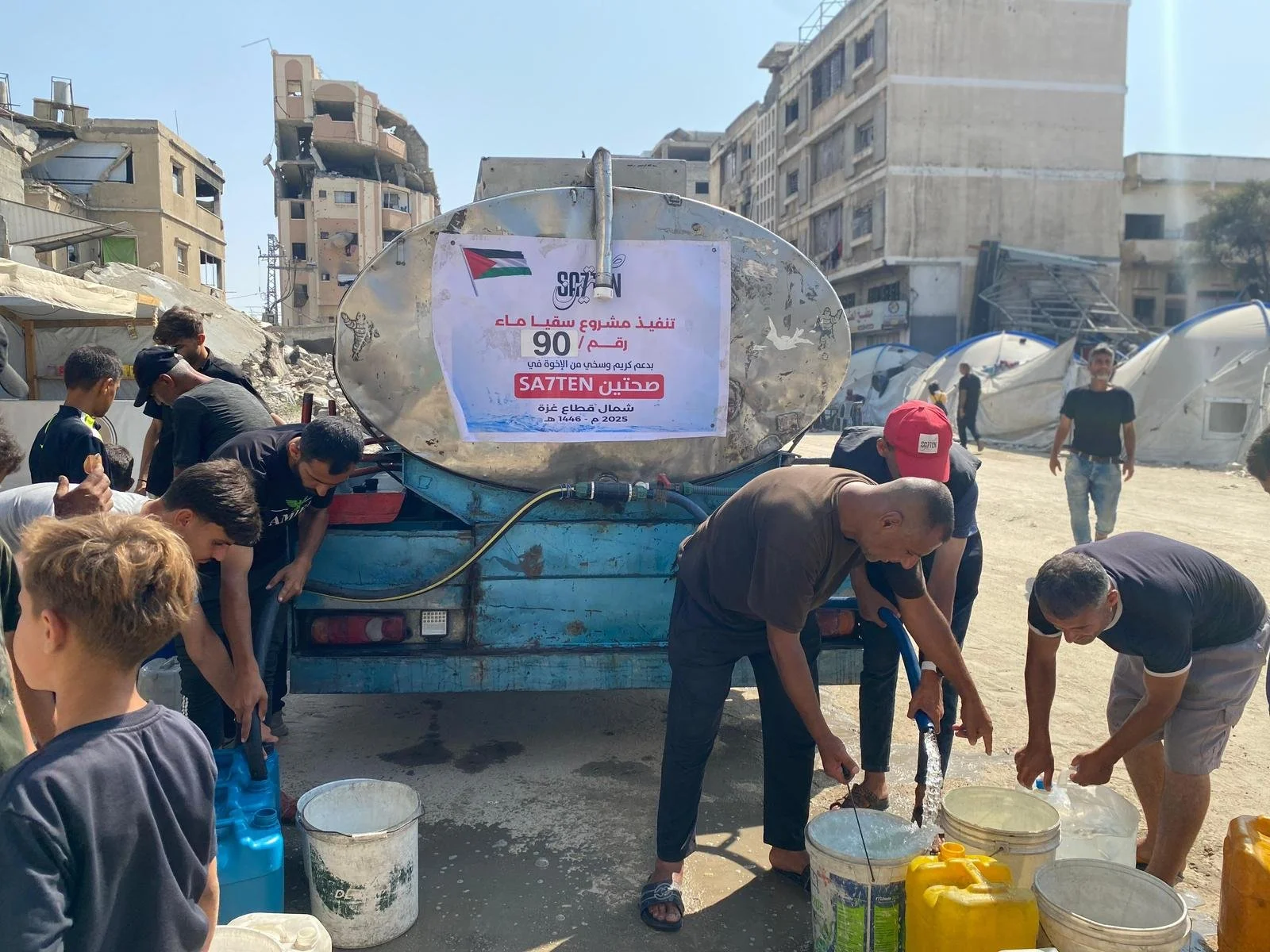
Sa7ten Team providing water trucking for the people in North Gaza.
“They came at us with knives and clubs, on the first day of Eid, just as our team was leaving the prayer.”
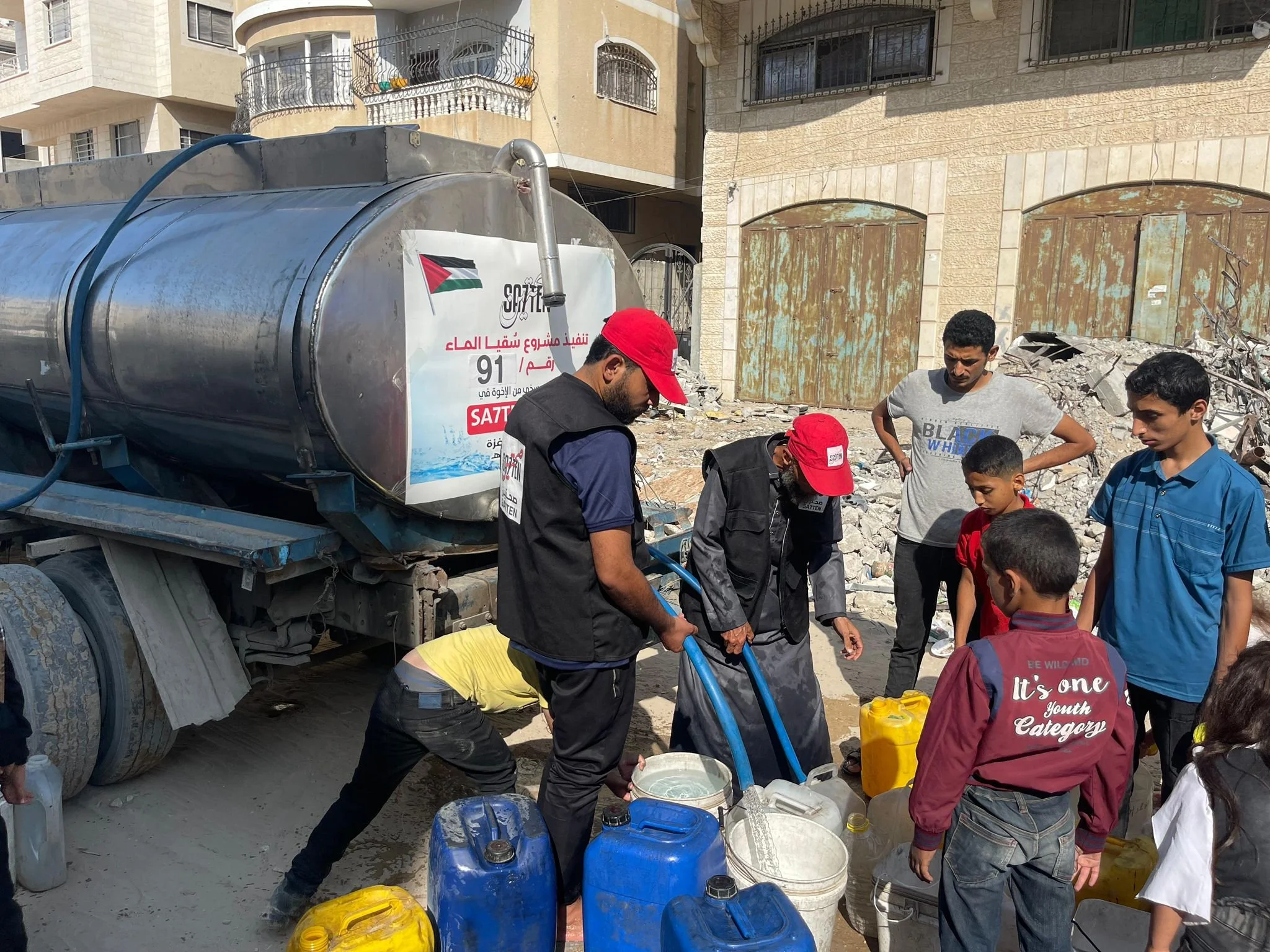
This water distribution was never meant to be just another routine activity. Days after members of the Sa7ten team were threatened by a group of outlaws demanding a cut of the aid they receive to operate in Gaza, the trucks went out anyway, three of them, each carrying 7,000 liters of clean water, a total of 21,000 liters delivered directly to the people.
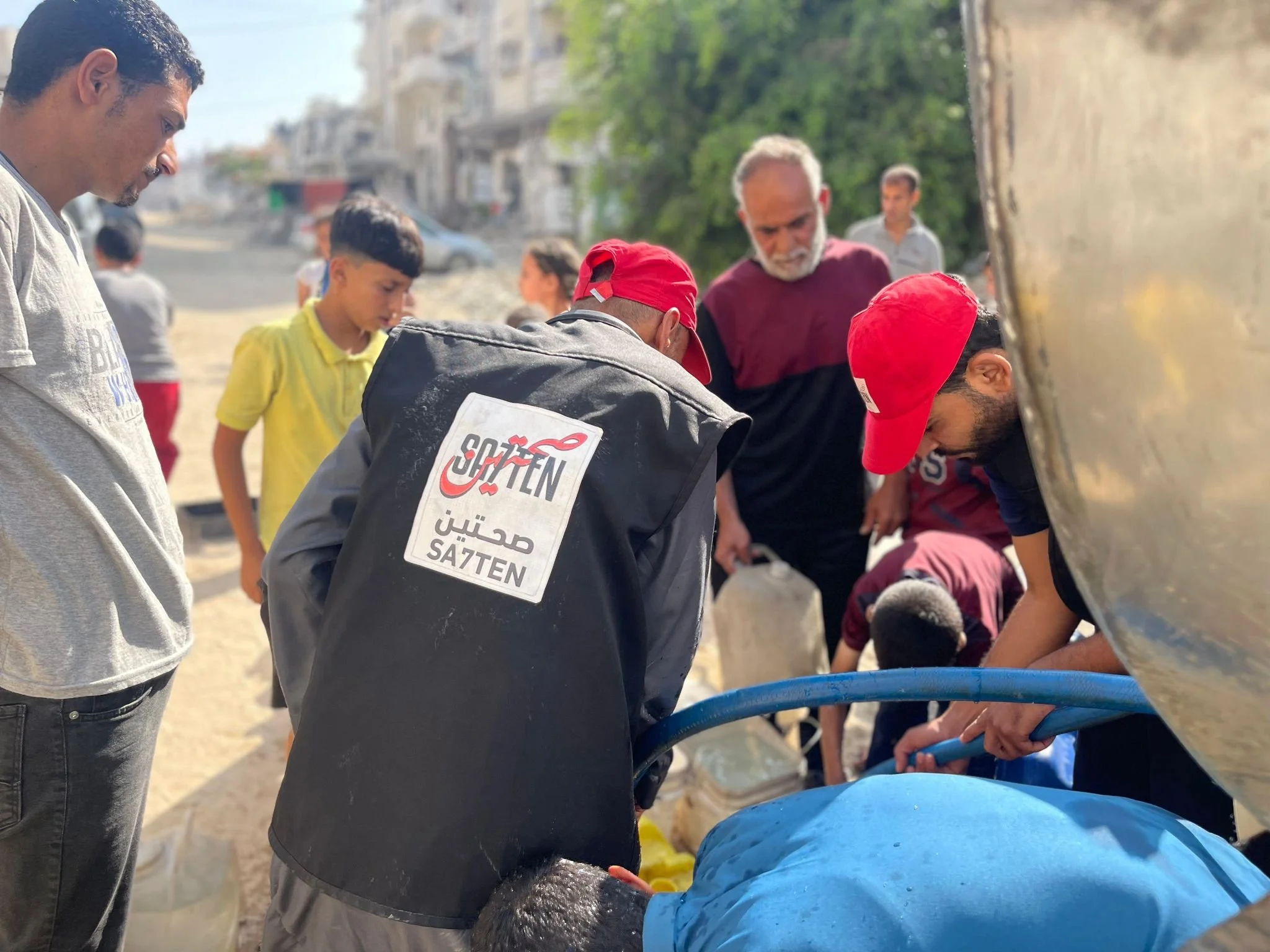
“The truck stops in a place, fills, and keeps moving… people keep coming until the water runs out.”
- Ahmad, Sa7ten’s Field Director.
One truck was sent to Tel al-Hawa, another to the area near Madinet Al-Lahoum in west Gaza, and a third to Al-Nasr neighborhood, beside the Italian complex.
Despite the threats and pressure, the distribution went smoothly. “Alhamdulillah, the activity was successful.”
A day after the water activity, Sa7ten field team organized a delayed Eid activity for children, an event they hadn’t been able to hold earlier due to the violence. “Today we’re doing a kids’ event we didn’t do during Eid, we’re doing it now, in front of everyone.”
After the attack, the issue was brought to the Makhateer, Gaza’s community elders. A verbal agreement gave the team a few days’ space to operate. “Yesterday was the second session, and they gave us another 24 hours.”
It wasn’t a full solution, but it was enough.
“Our idea is to help people - our people under bombardment, under destruction, our displaced people. These are the dignified ones. We are their servants.”
Sa7ten field team refused to hand over any part of the aid. “They told us, if you want to work, give us a share. We want money.” But there was nothing to give. “We receive donations in dollars, we spend them on operations, and that’s it.”
Meanwhile, the cost of survival is rising beyond reach. “You need 100 dollars just to feed your kids for a few days.” And if someone sends you $100 from abroad, “you lose 50 in fees just to receive it.”
People pleaded for food to reach them. “Yesterday, everyone was shouting, ‘Please, just let the 40 trucks through’.” Even then, some blocked roads and looted. “The hungry ones don’t steal aid. They wait in line.”
For the team, this work is not about recognition or reward. “We don’t drive fancy cars. We don’t wear uniforms. Our guys go out on foot, or on bikes and donkey carts. The pot we cook in for the people is the same pot my mother and sisters use.”
In a time when trust is thin and chaos pays well, they insist on staying grounded. “We didn’t become better than anyone. We live like everyone else, sometimes worse.”
They choose to be present. “We’re not going anywhere. Even if things get harder, we keep going. No one will stop us, not by force, not by intimidation.”
Beyond internal pressures, Gaza now faces intentional disruption of aid. As reported by Al Jazeera, Israeli forces are arming gangs inside Gaza to create chaos, hijack humanitarian shipments, and undermine relief efforts, all part of a broader strategy to justify deepened control and collective punishment.
This reality demands a global response. Aid must reach Gaza without political or armed interference. Teams like Sa7ten, who continue to serve under siege and threat, need support and protection. The weaponization of hunger, through roadblocks, looting, or coordinated gang activity, must be named for what it is: a war tactic aimed at breaking the will of a people.
Every liter of water, every child’s laugh, every delayed celebration, they are not just acts of relief. They are acts of resistance against a system designed to crush even the smallest signs of life.