
Gaza, May 2025
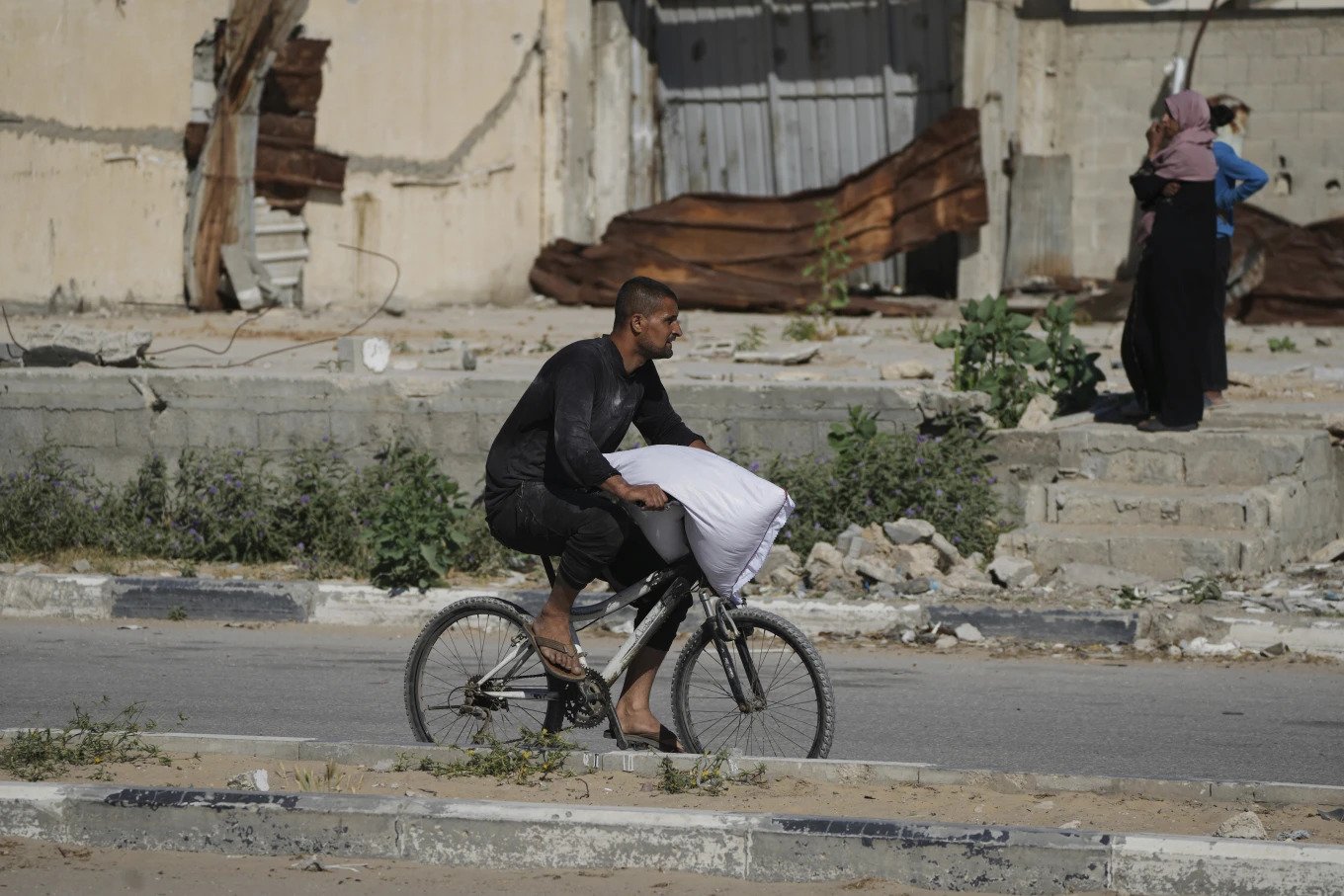
Palestinians carry bags of flour after storming a U.N. World Food Program warehouse in Zawaida, Central Gaza Strip, on Wednesday, May 28, 2025. (AP Photo/Abdel Kareem Hana)
“The heart is full,” says Ahmad, Sa7ten’s operations manager, his voice tight with urgency. “The thieves have reached us. Not rumors, real events. And they didn’t stop at aid trucks. Now even if you buy a bag of flour with your own money to take home it can be stolen from you in the street.”
In Gaza’s shattered camp markets, where desperation is layered under dust and rubble, the threat is no longer just from airstrikes, but from within. Recent weeks have seen a sharp escalation in attacks on distribution points, community-led aid movements, and even individual attempts to transport basic goods.
Ahmad recounts a recent effort to source fifteen bags of flour from the south. The logistics were complex: the flour cost upwards of 1,500 shekels per sack, with transport, coordination, and safety considerations pushing the total even higher. The plan involved sending a few trusted individuals from the community to bring the flour back to the northern camps.
“From day one there were problems,” he says. “We were up before dawn trying to coordinate, but one of the boys was attacked before they even left. The whole plan collapsed.”
This collapse is not isolated. Markets like Souq al-Sahaba and the Saraya intersection have become flashpoints for theft, intimidation, and misinformation. The pressure is magnified by what Ahmad describes as a collapse of trust, not just among people, but in the very space aid workers once moved through with purpose. “Even helping has become risky,” he says. “When those trying to restore calm are the first to be targeted by airstrikes, when aid workers are treated as threats, it sends a message: no one is safe, not even those trying to hold the line.”
This relentless targeting, Ahmad says, has left many feeling like every corner is laced with risk. “You begin to wonder,” he reflects, “not if danger will come, but from where, and whether anyone will be left to tell the story.”
“It’s not random,” he stresses. “Fifty individuals’ storm into a market, and only the four trying to calm things down are visible to the drones. What happens next? The four get bombed.”
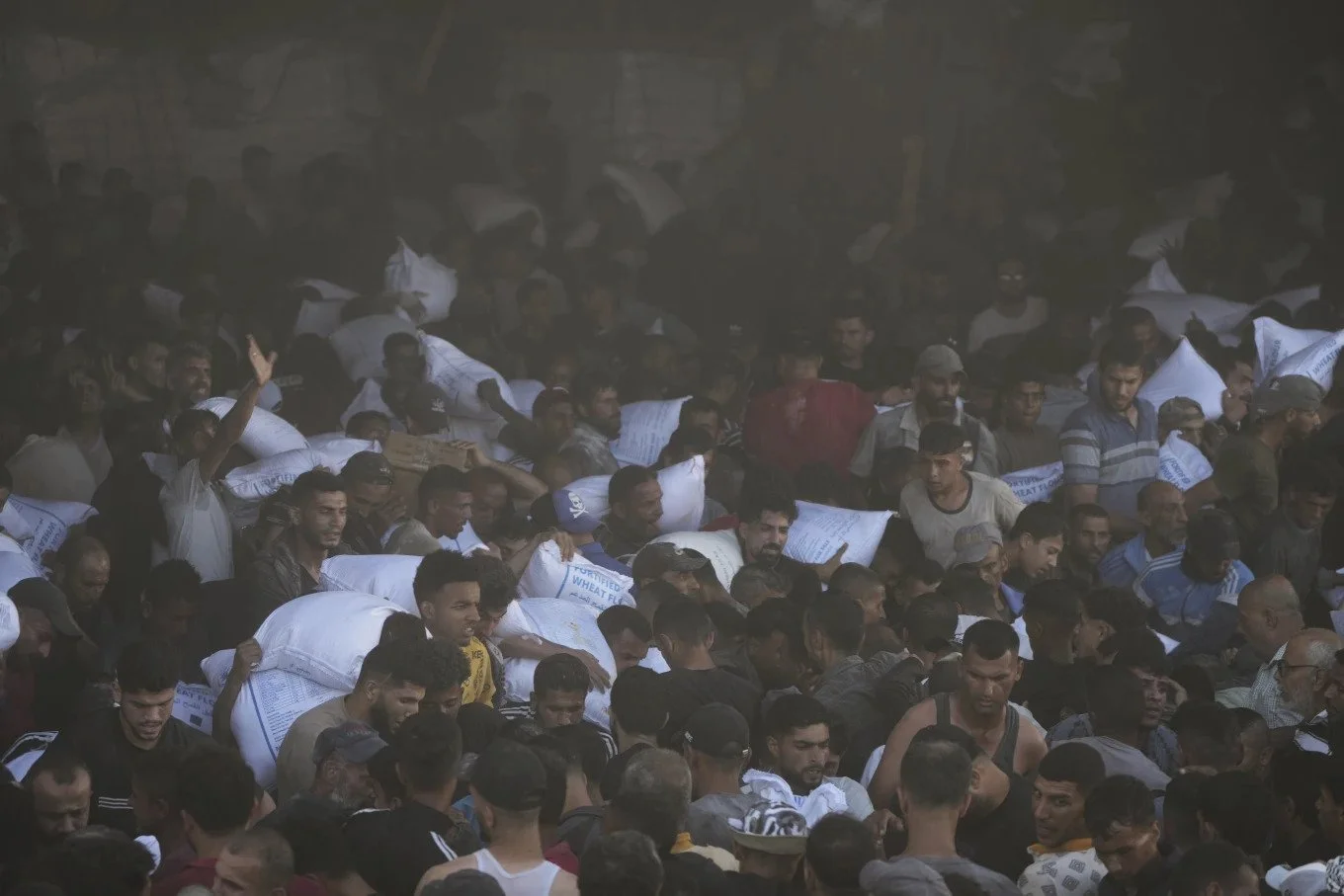
Palestinians carry bags of flour after storming a U.N. World Food Program warehouse in Zawaida, Central Gaza Strip, on Wednesday, May 28, 2025. (AP Photo/Abdel Kareem Hana)
In one instance, a team of local men who stepped in to restore calm were killed in what Ahmad described as “a massacre” - a deliberate strike that eliminated those trying to stabilize the area and allowed chaos to swell unchecked.
Sa7ten has also shifted some of its recent relief focus to water delivery after security risks blocked their flour operation. On the day of delivery, two vehicles each carrying 7,000 liters were dispatched to Al-Azhar and Al-Nasr camps. “Even that wasn’t simple,” Ahmad says. “We were afraid the vehicles would be attacked. We sent three individuals with each truck to make sure the water made it.”
Markets have also become too dangerous for food procurement. A vegetable merchant meant to deliver goods for aid parcels was delayed after being caught in violence near Souq Salah. According to Ahmad, even vendors with legitimate stock are targets: “Whether he’s a thief or a trader, people don’t ask anymore. They just attack.”
The consequences of these overlapping crises are not only logistical, they are personal and psychological. “I’ve never in my life feared war,” Ahmad confides. “Not bombs, not even nuclear threats. But now, I find myself afraid of a neighbor, because I don’t even know how to respond. It’s not someone far away, it’s someone who might live next door. Someone who’s desperate, angry, and I can’t stop him without making things worse. That’s how twisted this has become.”
The desperation has reached unimaginable levels. In one moment, Ahmad shares how $100, once enough for multiple days’ provisions, now buys just a kilo of lentils, a kilo of potatoes, and barely a bottle of cooking oil. “What do you tell a mother who wants to cook for her fasting children? That she needs $100 for one meal?”
For now, Sa7ten’s teams are focusing on places they can reach without sparking more violence—areas where smaller distributions can be done without igniting fights. But even that is no guarantee.
“We’re working with broken spirits,” Ahmad says quietly. “This isn’t about people turning on each other out of hatred,” Ahmad explains. “It’s hunger, it’s suffocation, people are cracking under the pressure. They’re just collapsing from what this situation is doing to them.”
Calls for a ceasefire echo in every corner. Ahmad, like many others, isn’t asking for peace - just a pause.
“Give us two months,” he pleads. “Let it stop for two months. Even if the war comes back after, those months could save lives. Maybe we can clear out the ones causing chaos. Maybe we can breathe.”
As the siege tightens and aid distribution becomes a battleground of its own, the work of grassroots efforts like Sa7ten grows ever more dangerous, and more essential.