
Community-Led Action Under Siege, Rooted in Responsibility and Resolve
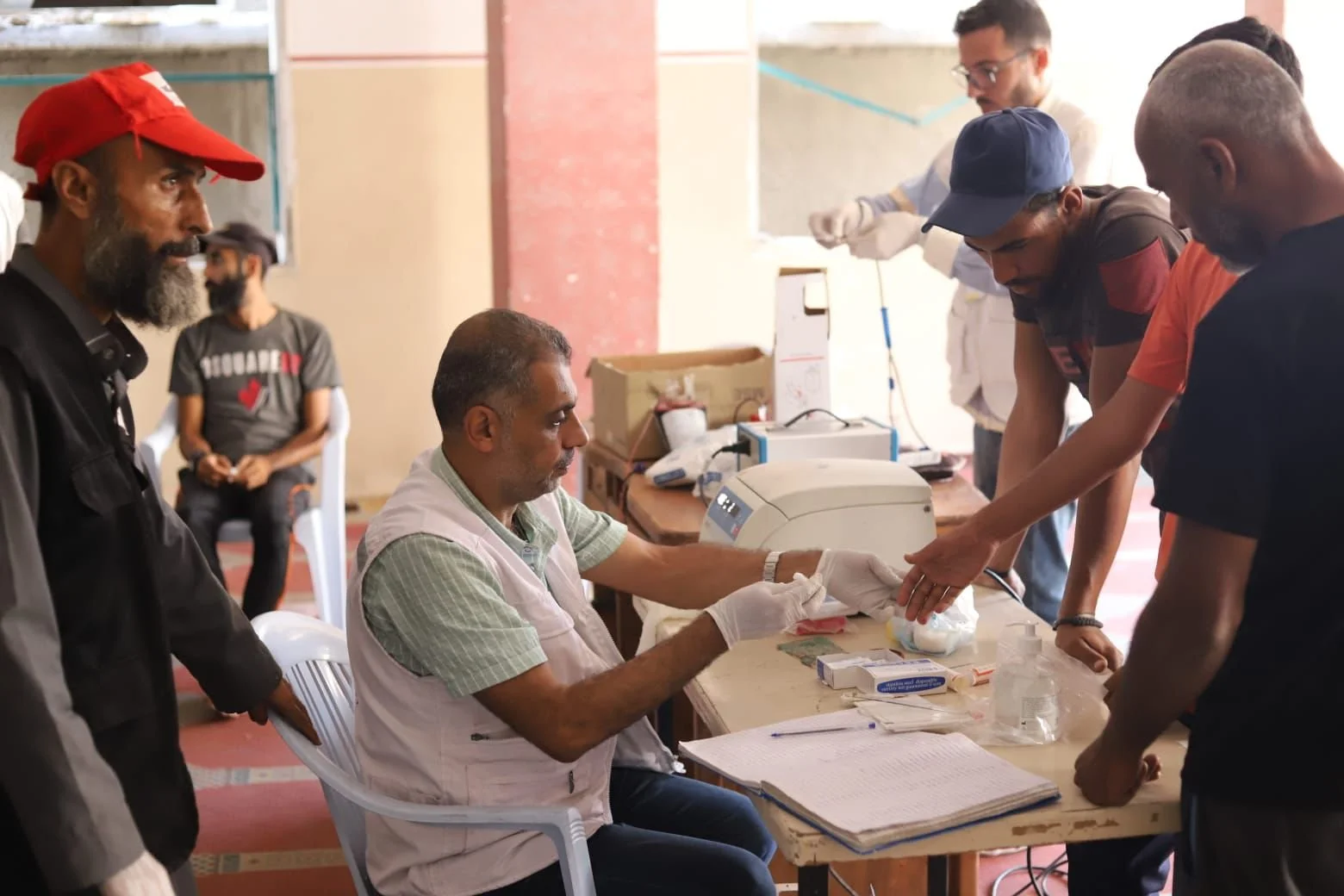
Over the course of nine days, from November 2 to November 11, 2025, we at Sa7ten carried out six blood donation campaigns across Gaza in response to an urgent call from the Gaza Blood Bank. During a fragile ceasefire repeatedly violated by the Israeli Occupation Forces, and under conditions of deepening humanitarian collapse, hospitals across the Strip were running out of blood. The Gaza Blood Bank, which supplies every hospital and field medical center in the Strip, contacted our Field Operations Director, Ahmad, directly. There were no intermediaries, no formalities – only urgency. The need was immediate, and as Ahmad recalled, it was our established presence and trust among communities that made the Blood Bank reach out to us first: “Our credibility in the work and our support for them is what makes them communicate with us.”
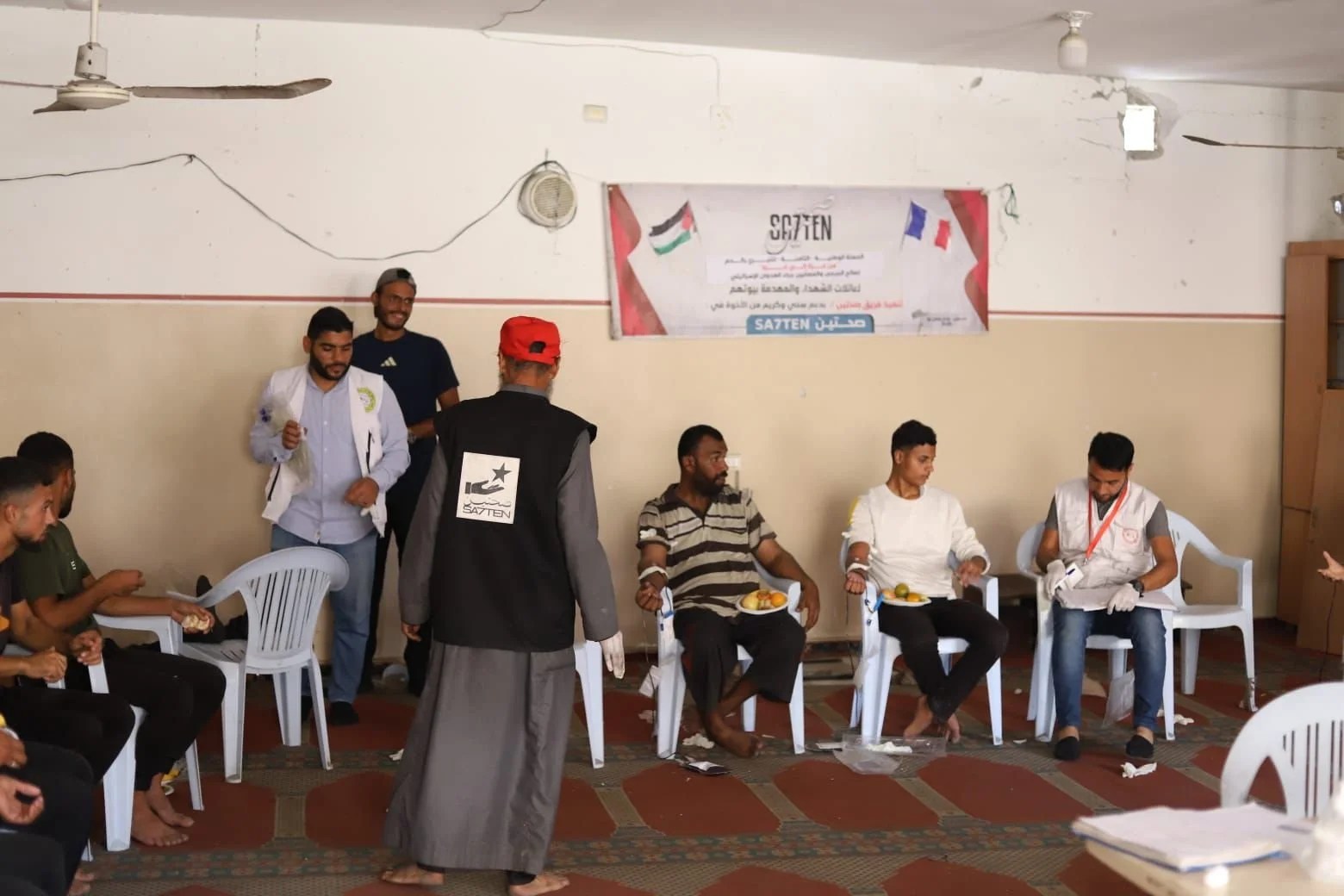
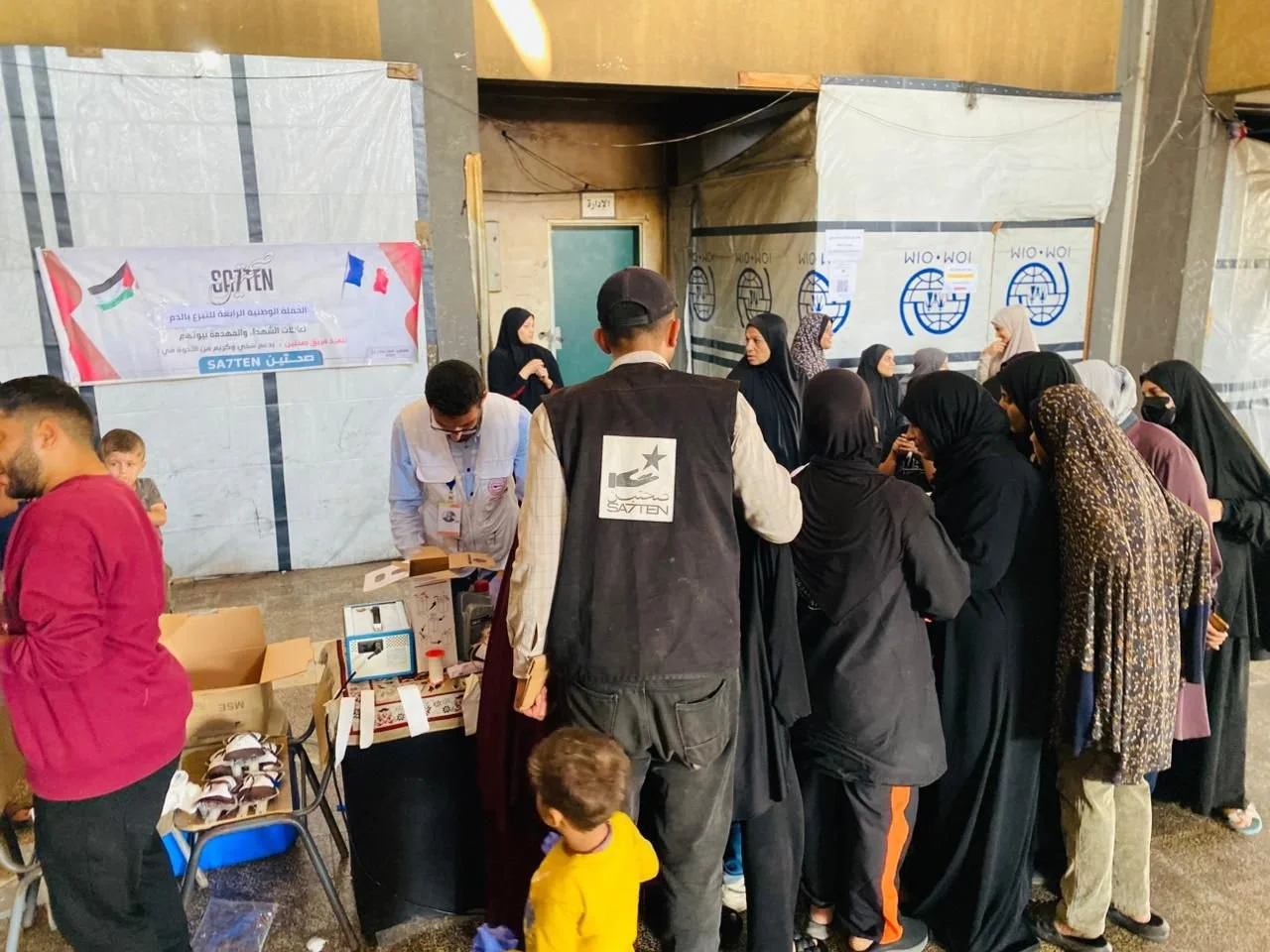
Our campaigns reached displaced families and communities in Al-Azhar Camp, Al-Awda Center on Al-Thawra Street, Nabaq Street Shelter in northern Gaza, shelter clusters in the Jabalia area, and finally the South Beach section of Al-Shati Camp, where our sixth campaign was held at Musalla Asqalan on November 11. Across these six locations, more than 850 people came forward. After medical screening, we collected approximately 185 usable units of blood. These units immediately entered Gaza’s emergency medical supply chain, supporting surgeries for the wounded, trauma care for victims of repeated bombardments, and treatment for chronic patients whose lives depend on blood transfusions.
These drives unfolded in a Gaza struggling with severe food shortages, widespread malnutrition, and the entire collapse of water and sanitation networks. Many potential blood donors were turned away because the lack of nutrition had weakened their blood. Movement remained dangerous, and essential goods – including humanitarian aid trucks – were allowed in at only a fraction of the agreed levels. With destroyed neighborhoods and displaced families living in overcrowded shelters, Ahmad described Gaza as “an entire city submerged in destruction and ash.” In these circumstances, even gathering people required effort that went beyond logistics. Volunteers walked tent to tent, registering donors manually and collecting phone numbers for SMS reminders because communication lines were unstable. “Our team toured the camp, tent by tent, asking who wants to donate blood,” Ahmad said, explaining the method that ensured high turnout in each location despite the challenges.
The sixth campaign in Al-Shati Camp marked an important expansion of our operations into southern areas, with strong participation despite fear, hunger, and the constant uncertainty of renewed airstrikes. Throughout all six campaigns, we also supported the Gaza Blood Bank’s 30 employees, who have worked without salaries through the entirety of this war, motivated solely by duty and a sense of service to their people. Their work, as much as the community’s participation, has allowed these campaigns to succeed.
We have been clear about the wider political reality surrounding our work. The pattern of broken agreements imposed on Palestinians is not theoretical to us; it is our lived experience. As we stated throughout the campaigns, “The Zionist state never kept its covenant with the Palestinian people or with the international community.” What we are witnessing today is an extension of a long history in which “all the international and regional powers… are working against us.” These are not observations made from a distance. They come from years of operating under bombardment, repeated displacement, and a global system that has consistently failed to offer protection or accountability to our people.
Yet even under this pressure, our commitment – and the commitment of our communities – remains unshaken. We see families who refuse displacement despite the destruction around them. We see people choosing to stay rooted even when promised safety elsewhere. This is why each blood donation campaign is more than a medical effort. It is an act of steadfastness, an affirmation that our presence here carries meaning, and that caring for one another is part of resisting disappearance.
This approach guides the next steps of our work. We are preparing for continued mobile blood drives across the Strip, expanding humanitarian operations in northern and southern Gaza, supporting winterization efforts in Al-Shati and Jabalia, and contributing to the repair of damaged sanitation networks. Our coordination with the Gaza Blood Bank continues to ensure that hospitals do not reach critical shortages. And to those who have stood with us, we say what we have said from the field itself: “Thank you for reinforcing our steadfastness, thank you for soothing our wounds, and thank you for standing with us during the hardest and worst circumstances.” Our commitment does not end here. We will continue this work without pause, “until we see a liberated Palestine that doesn’t need anything.”
Our work is ongoing. We are preparing monthly mobile blood donation drives across the Strip, winter relief initiatives for shelters in Al-Shati and Jabalia, repairs to damaged sanitation networks where disease risks are growing, and continued coordination with the Blood Bank to prevent life-threatening shortages. We will also expand our distribution and community-support activities to central Gaza as conditions allow. Our role is not temporary. As Ahmad expressed in a message of gratitude to supporters, “Thank you for reinforcing our steadfastness, thank you for soothing our wounds, and thank you for standing with us during the hardest and worst circumstances.” And as he stated clearly regarding our long-term commitment, “We will continue… until we see a liberated Palestine that doesn’t need anything.”
For those who ask how they can help, the answer is simple: supporting Sa7ten is not charity – it is standing with people who insist on rebuilding their lives with their own hands. Your support ensures that Palestinians continue to own every inch of Gaza, that hospitals remain supplied, and that communities have the means to stay rooted despite every attempt to uproot them. Our work continued under bombardment. It continues under siege. And with your support, it will continue until Gaza can stand on its own terms.
