
21/08/2025
Hunger is not an accident in Gaza. It is enforced by siege, and resisted through collective care.
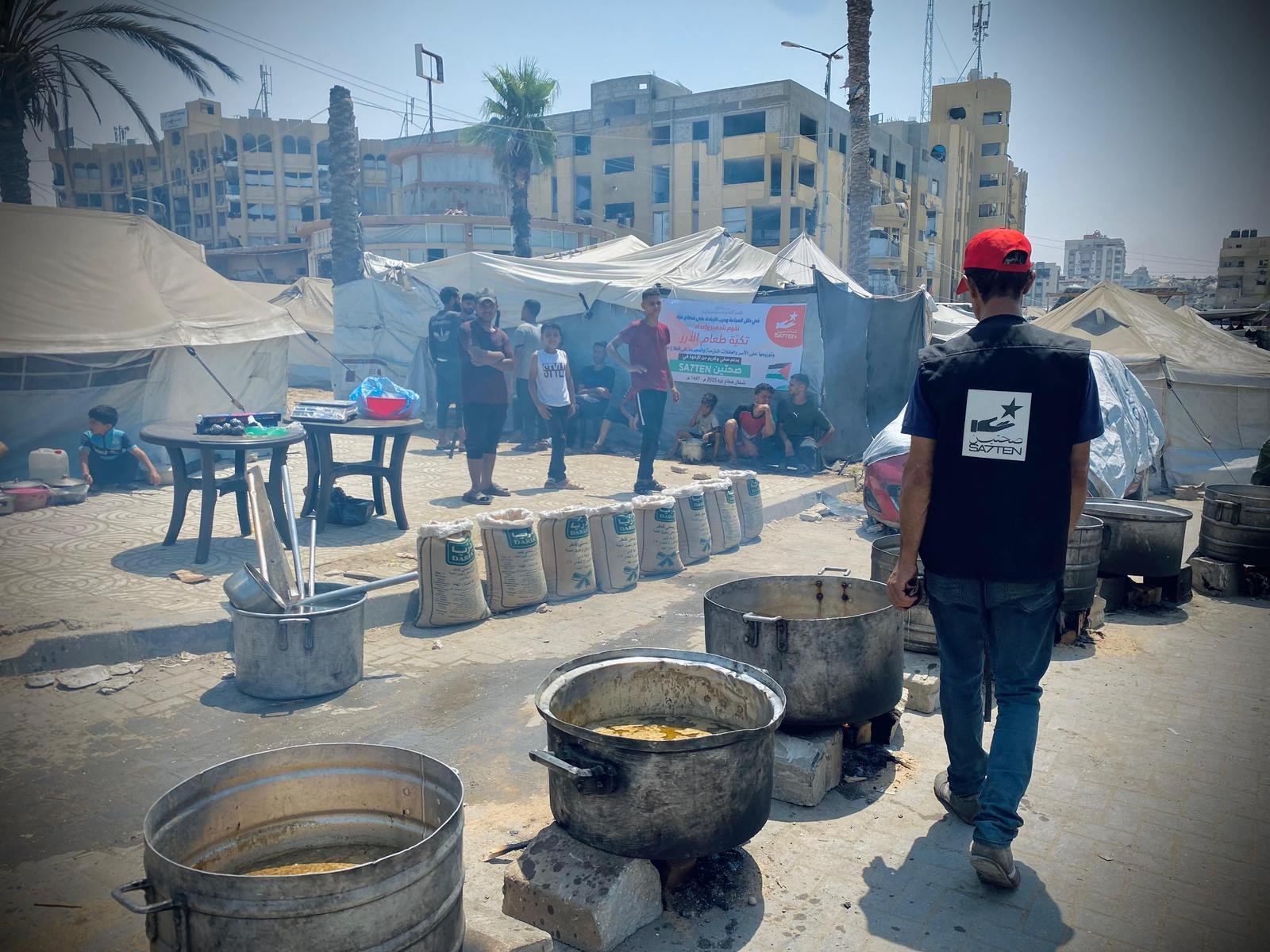
On August 13 and 14, our team in Gaza carried out two urgent interventions: distributing food packages and cooking together with families trapped in displacement camps. Both were responses to one unrelenting truth, under the zionist siege, hunger is weaponized, and every bite of food becomes a struggle for survival.
For days before the distribution, we worked through chaotic markets, where the cost of essentials changed by the hour. Milk stood at 30 shekels, rice at 35, dates at 40, numbers impossible for families who had nothing left. Even when crossings briefly opened, goods remained beyond reach.
As Abu Salah, our Field Coordinator, explained: “We focused on items people’s bodies needed, and that they longed for but could not buy.”
On August 13, after three days of sourcing and packing, we delivered 120 food packages in al-Azhar displacement camp. Each package held staples and rare foods that had vanished from most homes: rice, sugar, pasta, tahini, cooking oil, powdered milk, dates, and tomato paste. Families “under zero,” those without any income, without a single way to purchase food, were prioritized. These were not bags of scraps.
“The packages were not just bags of food, we picked the best we could find, because our people deserve that.”
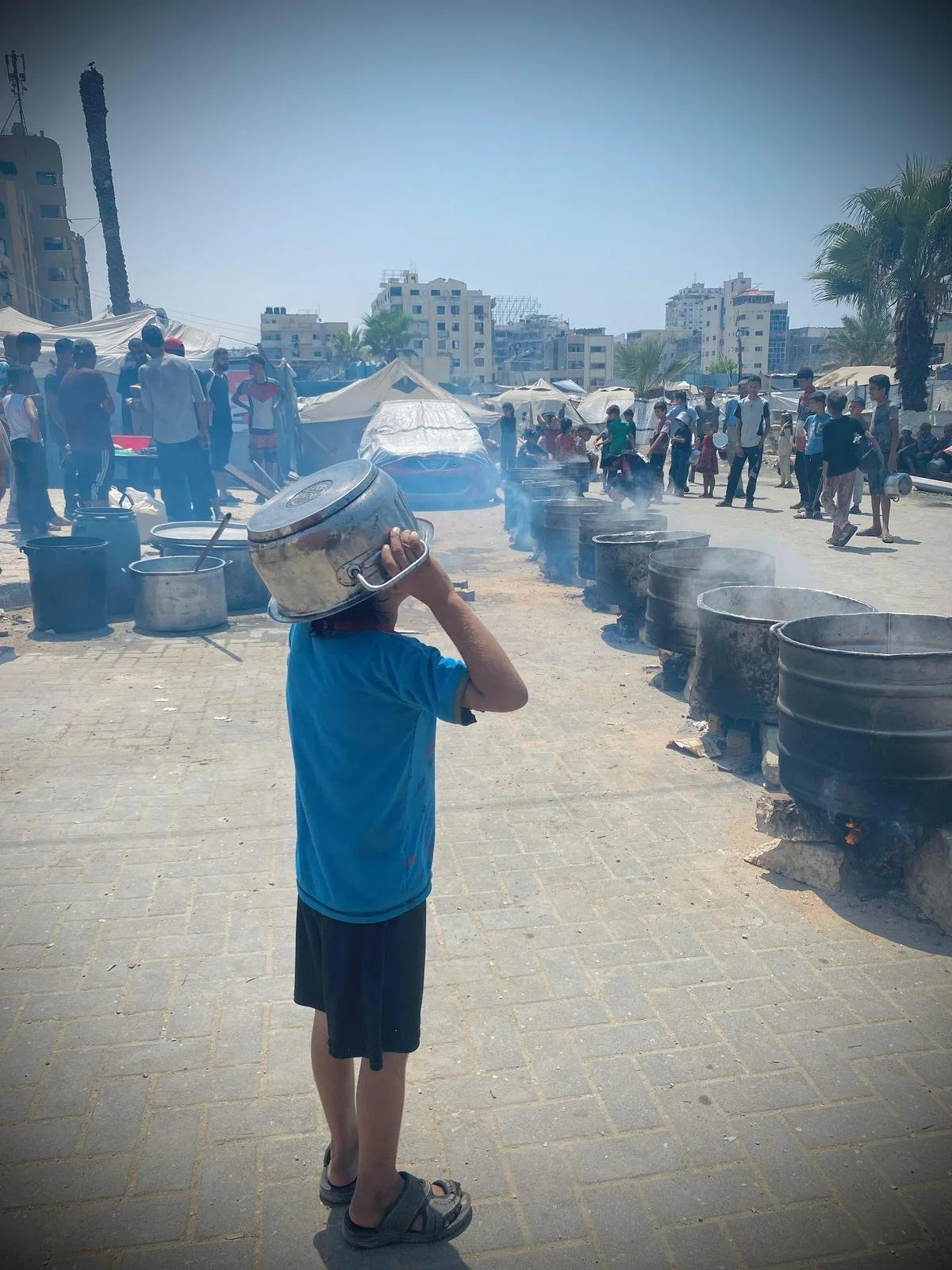
The next day, August 14, we turned to communal cooking. Twelve massive pots of rice were prepared in the heart of Gaza City’s tented camps. Preparations took days: collecting firewood, renting pots, transporting goods through countless checkpoints. By noon, the fires were burning, and families pressed forward. Hunger turned anticipation into urgency, and urgency into desperation. People crowded so close that some nearly fell into the flames. Reflecting afterwards, Abu Salah said: “If the quantity had been doubled, still not a single grain of rice would have remained.”
What we saw that day is not a story of relief but of deprivation: when families risk burns for a plate of rice, it is because the siege has starved them into desperation. The genocide in Gaza is not only carried out by bombs; it is executed through hunger, through blockade, through every empty shelf and unaffordable item. Our work is not charity. It is survival organized in community, despite the system that seeks to erase us.
And so we speak directly to those beyond Gaza. To individuals watching in paralysis: movement is resistance. Share, speak, act, and give where you can. Helplessness is what the system wants, do not give it power. To international NGOs: many of you have now begun naming this reality as genocide. That is necessary, but it is also late. Every week of hesitation has cost lives that could have been spared by courage and action. Gaza is a call to reflect on the very frameworks and internal structures that keep you bound to procedures instead of people, that prevent the agility and responsiveness you so often demand of others. To governments and institutions: your weapons, votes, and aid to Israel sustain this machinery of starvation. Open humanitarian corridors, lift the siege, authorize medical evacuations, and stop enabling genocide.
On August 13 and 14, our team carried rice, oil, and dates, but more than that, we carried a refusal to allow hunger to define our people’s future. As long as the siege continues, so will we.