
June 2025 Operations
June 1 – 30, 2025
Location: Gaza Strip
Context and Situation Overview
June in Gaza was a month marked by profound collapse, driven by the ongoing genocide perpetrated by the Zionist state of Israel against Palestinians. Traditional infrastructure for aid failed, fuel disappeared from markets, and desalination plants were hit. Inflation made basic necessities, like a bag of flour, cost a week's wages. Most international groups either left or paused their work. In this vacuum, Sa7ten chose to remain present. We worked not because it was safe or easy, but because there was no other choice. Our people reached out with desperate pleas, and we responded with a consistent "yes." This environment of widespread destruction and scarcity, a direct consequence of the systematic violence, shaped every intervention, requiring immediate and direct action to meet fundamental needs.
Narrative of Sa7ten’s Activities
Throughout June, Sa7ten focused on providing essential water, clothing, and moments of joy for children. Our activities directly addressed the most urgent needs arising from the ongoing conflict and siege conditions imposed on our people.
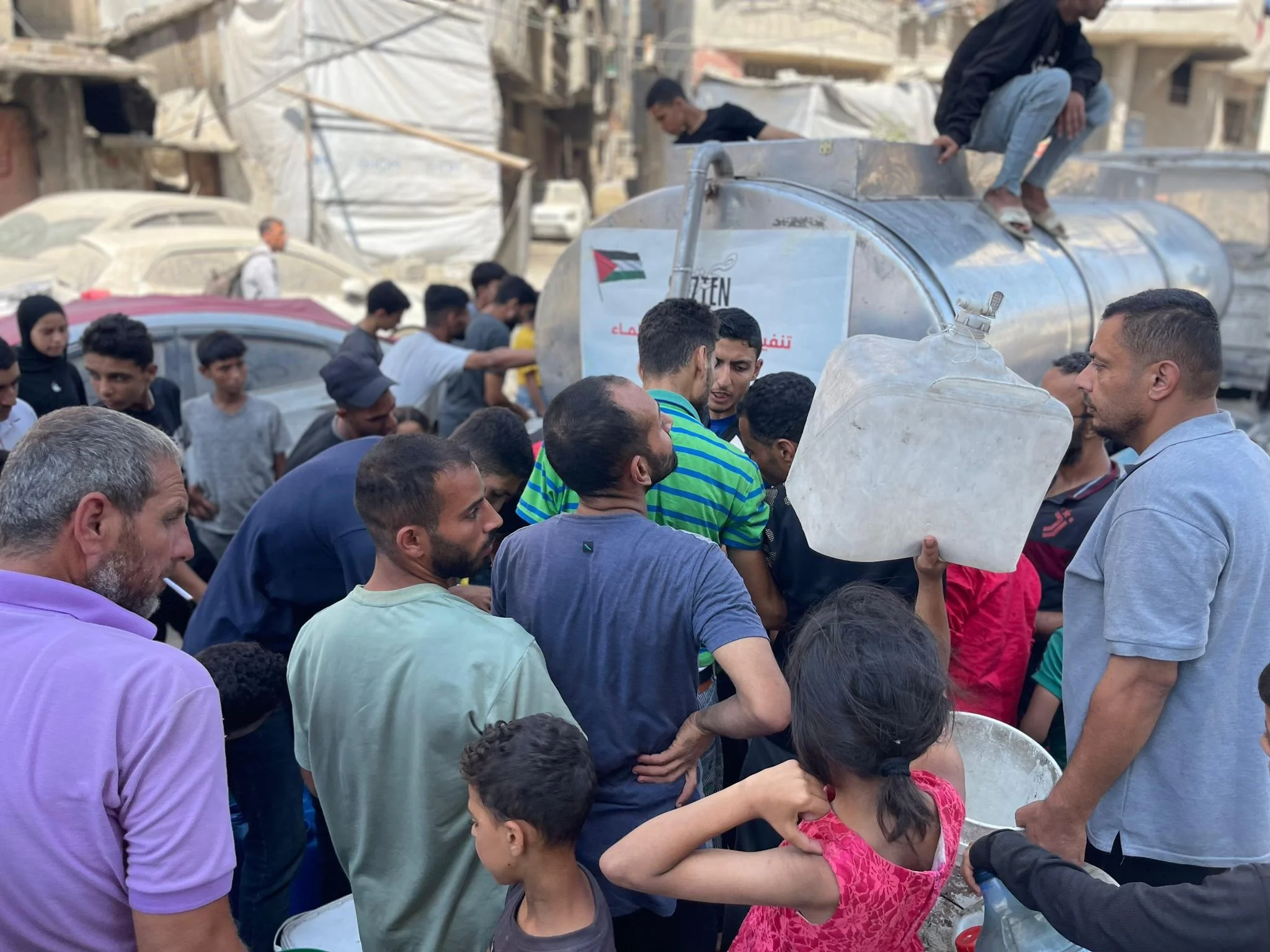
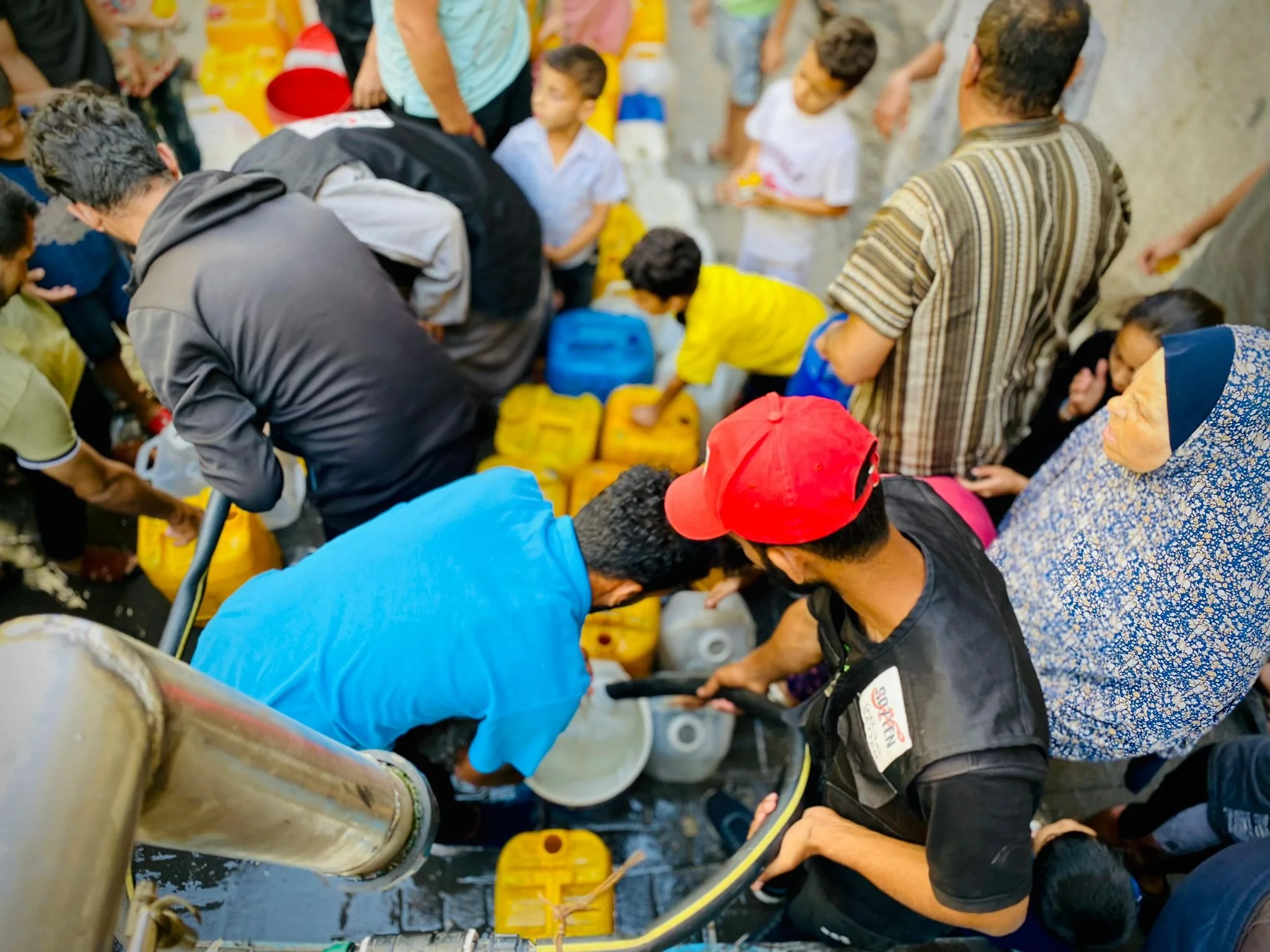
The most critical need was water. With wells damaged, pipes broken, and no power for remaining wells, clean water became a luxury. We responded by distributing over 170,000 liters of potable water using more than 24 trucks. These operations were adjusted in real-time to avoid dangers and community tensions. For instance, during Eid al-Fitr on June 9, we delivered 21,000 liters in Tel al-Hawa, the Meat Market District, and Al-Nasr, even after facing threats. From June 14 to 23, we focused on areas like Tal al-Hawa, Al-Daraj, Al-Quds Hospital zone, and the particularly dangerous Street 10, where other trucks were unwilling to go. On June 28, five more trucks carried water to Al-Azhar, Gaza Al-Izzeh, Ard Al-Insan, and Al-Mina camps in response to urgent requests. Each water delivery was a direct response to a life-threatening shortage.
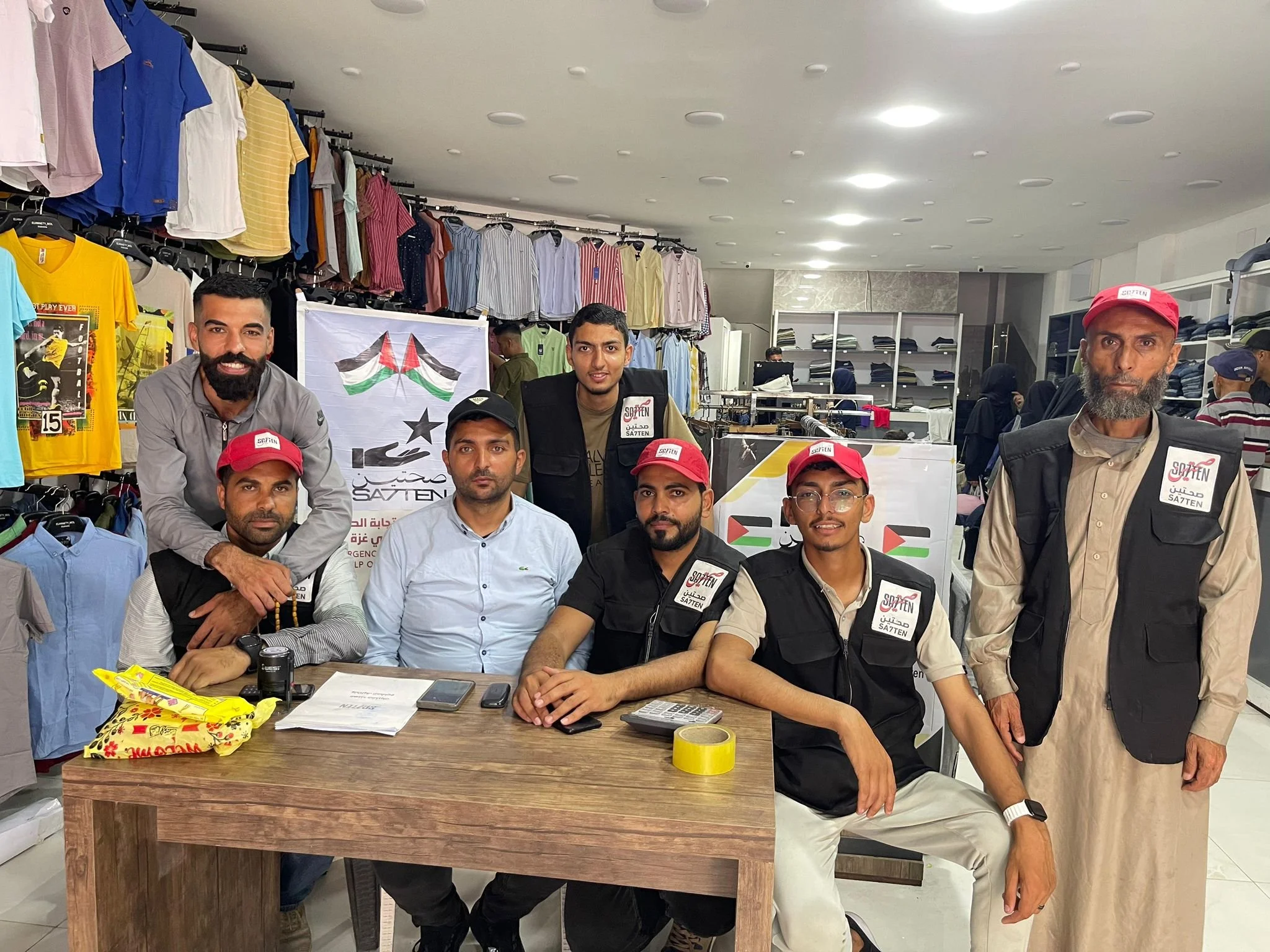
Beyond physical survival, we worked to restore dignity and emotional well-being. On June 4-5, we organized an Eid clothing drive. This was not about charity; it was about allowing children to choose their own new clothes in a functioning store, creating a festive atmosphere with music and clowns. This approach aimed to restore a sense of normalcy and personal choice for our children.
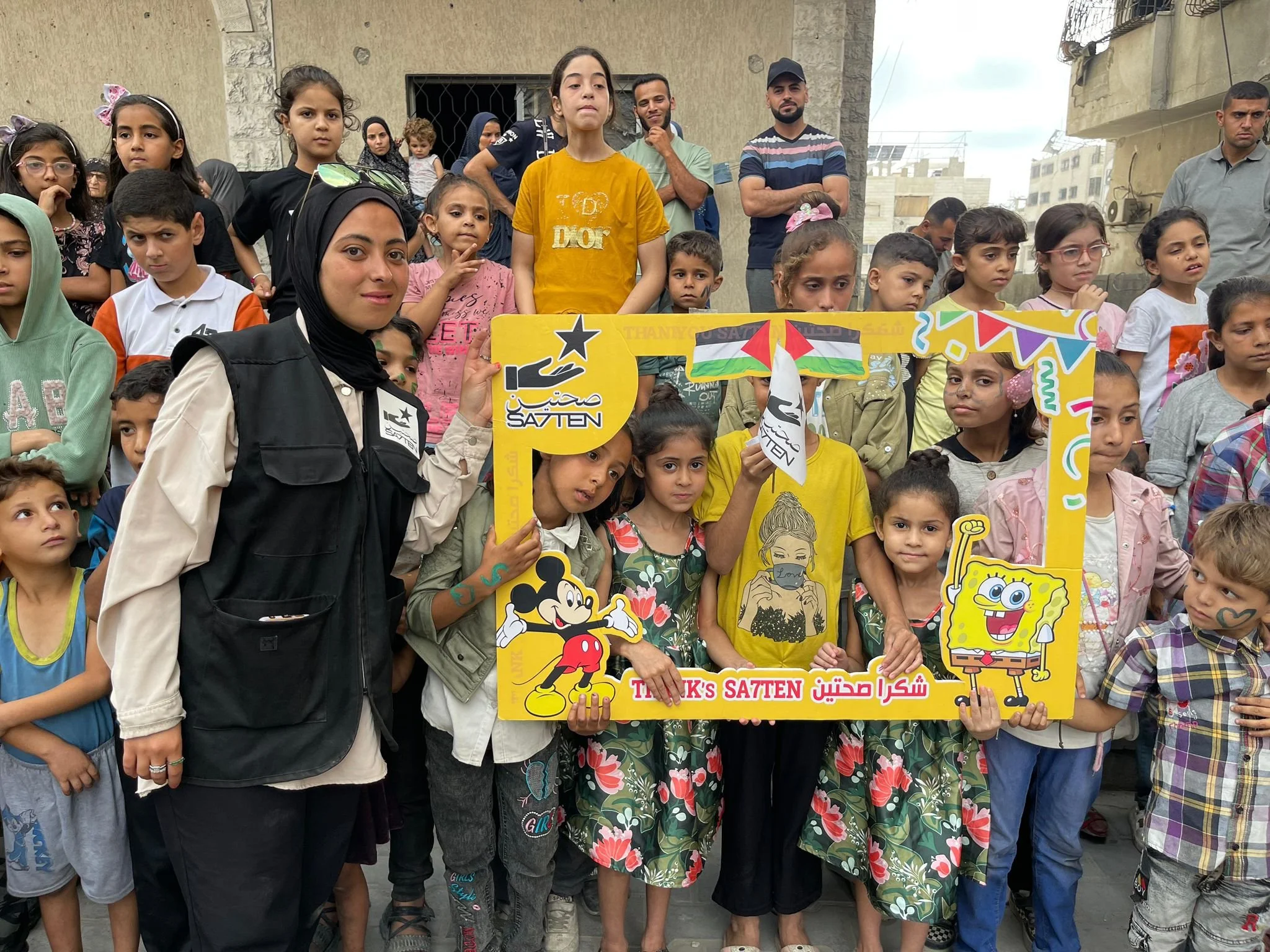
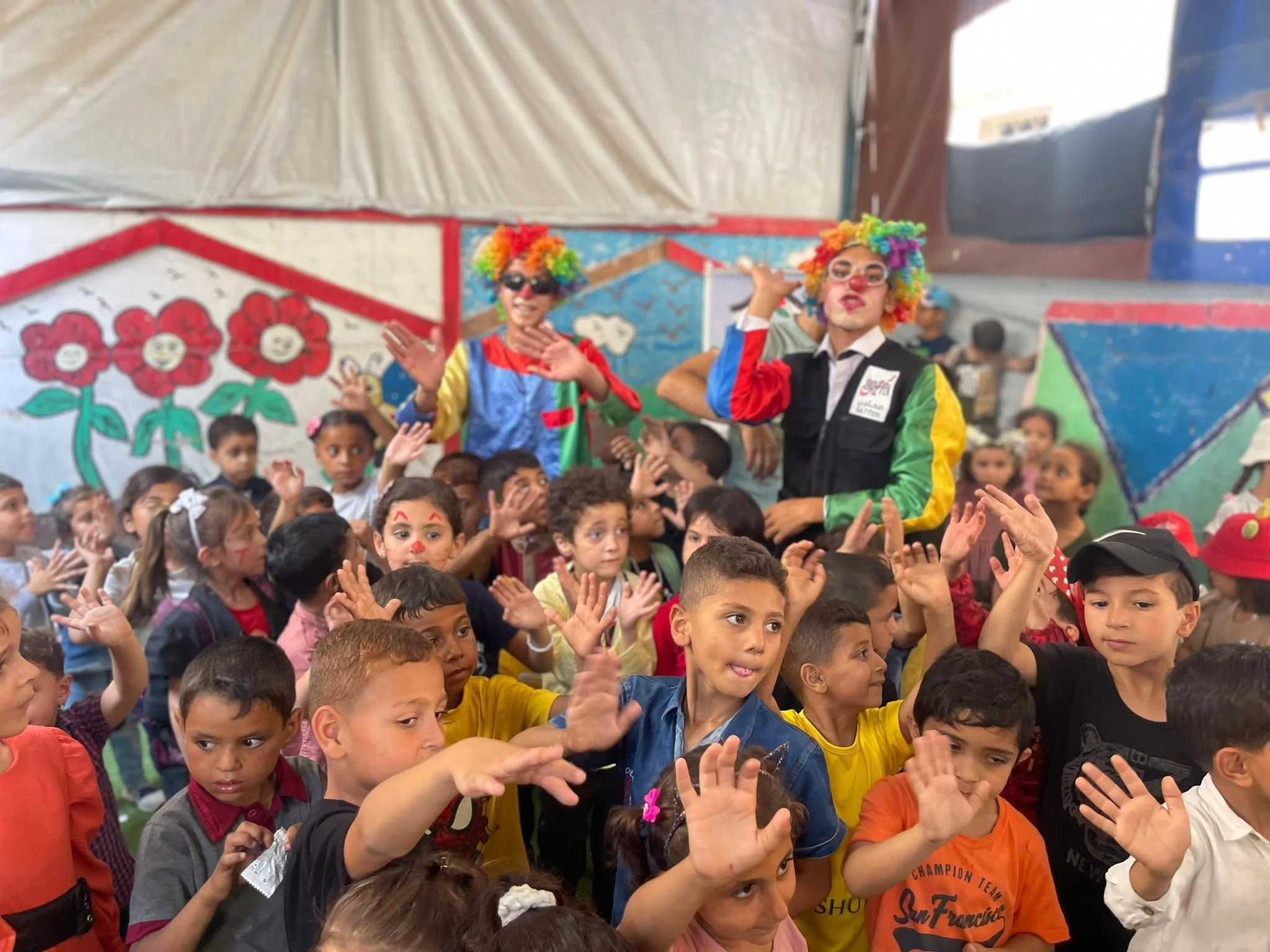
We also created spaces for children to experience joy. On June 10, two Eid events took place at Little Angel Kindergarten and Tanmiya Shelter, featuring dancing, clown shows, and traditional dabke. On June 25, we held three simultaneous festivals in Yarmouk, Palestine Stadium, and Hikma camps, working with local performers to create carnival-like spaces with toys and games. These events were designed to offer children moments of carefree happiness amidst their daily struggles.
Activity Summary by Date
Late May – June 2: Water distribution (50,000 liters) and vegetable distribution (300 kg) in Al-Azhar Refugee Camp, Al-Nasr District, Sheikh Radwan, and the vicinity of Al-Shifa Medical Complex. Vegetables were also delivered to Al-Yarmouk and informal roadsides near camps.
June 4–5: Eid clothing distribution in West and Central Gaza Strip, primarily through Al-Huwaiti Commercial Store.
June 9: Emergency water distribution (21,000 liters) in Tel al-Hawa, Bijwa (Meat Market District), and Al-Nasr (near Italian Complex). A post-Eid community gathering for children was also held.
June 10: Eid celebrations and recreational events for children at Little Angel Kindergarten (adjacent to the Holy Family Church) and Tanmiya Shelter Center (opposite the Islamic University).
June 14 – June 23: Water distribution (approximately 78,000 liters) across Al-Nasr neighborhood (near the Italian Complex), vicinity of Al-Quds Hospital (Tal al-Hawa), Meat City area, Al-Daraj area, vicinity of the Blood Bank, Haidar Abdel-Shafi roundabout, Extension of Al-Nasr Street, and Street 10 near the Nabulsi roundabout.
June 25: Children's festivals held simultaneously at Yarmouk camp stadium, Palestine stadium, and Hikma displacement camp.
June 28: Water distribution (five trucks) in Al-Nasr neighborhood (near the Italian Complex), Al-Nasr neighborhood Gaza Al-Izzeh camp, Al-Nasr neighborhood Ard Al-Insan camp area, Al-Azhar camp, and Al-Mina camp.
Targeted Locations
Our work in June focused intensely on areas experiencing severe deprivation and displacement. Recurrently served areas included:
Al-Nasr neighborhood (including areas near the Italian Complex, Gaza Al-Izzeh camp, and Ard Al-Insan camp area)
Tel al-Hawa (including vicinity of Al-Quds Hospital)
Meat Market District (Bijwa area)
Al-Azhar camp
Al-Mina camp
Al-Yarmouk
Al-Daraj area
Sheikh Radwan
Vicinity of Al-Shifa Medical Complex
Hikma displacement camp
Palestine stadium
Little Angel Kindergarten (adjacent to the Holy Family Church)
Tanmiya Shelter Center (opposite the Islamic University)
Street 10 near the Nabulsi roundabout (a newly reached, particularly challenging area)
Targeted Audiences
Our activities served those most affected by the ongoing crisis:
Displaced individuals living in camps, informal shelters, and roadside areas.
Families hosting displaced relatives, facing increased household needs.
Children, particularly those showing signs of malnutrition, injury, or extreme fatigue, and those who have experienced trauma.
Injured or disabled individuals.
Households headed by widows or elderly caregivers.
Children observed alone or foraging for food.
Families of those who have died.
Individuals living in neighborhoods with no access to piped water.
Logistics and Team Operations
Operating in Gaza in June required constant adaptation and ingenuity. Traditional supply chains were broken, and security concerns meant frequent last-minute changes to routes and plans.
For water distribution, trucks were often chosen to look inconspicuous and were rerouted to avoid drone targeting. Water was distributed directly, often bucket by bucket, to prevent large gatherings. Community volunteers, some of whom also documented the process for safety and verification, staffed each truck. The team developed a system of pre-notifying communities about truck arrival times to ensure smoother distribution.
For vegetable distribution, with markets closed, the team used donkey carts and foot teams to hand out packets directly. This involved sourcing produce from local growers operating outside urban markets.
The Eid clothing drive was held in a functioning commercial store, which allowed for organized sections for children, women, and men, preserving dignity by allowing individuals to choose their own items. Volunteers managed the flow of people and guided them.
Children's events were organized rapidly, sometimes within four days, demonstrating the team's ability to mobilize quickly. Team members coordinated with local entertainment groups and managed all aspects, from sound checks to distributing invitations. Despite resource limitations, the team ensured every child received a small gift or prize.
The team itself is made up of individuals who are often displaced and facing the same hardships as our people. They continue to work despite personal losses, refusing stipends, borrowing phones, and navigating dangerous checkpoints to ensure aid reaches people.
Public Perception and Ground-Level Impact
The activities were met with immense need and appreciation. Water trucks were immediately emptied, with people often still needing more. This immediate consumption underscored the severity of the water shortage and the direct impact of our efforts. Communities have come to rely on Sa7ten, understanding that our presence means water is available.
The Eid clothing drive created a "temporary sanctuary" filled with music, clowns, and smiles. Volunteers reported seeing tears in the eyes of parents watching their children choose new clothes, many receiving their first new clothing since the war began. This initiative restored a sense of autonomy and self-worth for our people.
The children's festivals brought visible upliftment and laughter to children and adults alike. Parents found happiness in seeing their children play and dance freely, offering a rare moment of release from constant worry. These events helped to reconnect families and children to moments of joy and to each other.
The team's consistent presence and direct engagement have built strong trust within communities, even when faced with accusations or misunderstandings born of desperation.
Challenges and Difficulties
The operational environment in Gaza presents systemic and escalating challenges, directly stemming from the ongoing genocide and siege:
Economic Collapse: Hyperinflation has made basic necessities prohibitively expensive. A kilogram of sugar, once 3₪, now costs 300₪. Fuel is scarce and costly, sold on the black market. This makes procurement incredibly difficult.
Financial Constraints: A significant portion of funds transferred into Gaza is lost to commissions (up to 45%), severely reducing the actual aid that reaches the ground. This creates a severe liquidity crisis, sometimes forcing operational pauses.
Infrastructure Destruction: Widespread damage to water lines, wells, and the lack of power generators mean that clean water is extremely rare. This is a deliberate tactic of the Zionist occupation authorities.
Logistical and Security Risks: Distributing aid involves navigating dangerous, targeted, and difficult-to-access areas. Armed groups have raided routes, and volunteers have received threats.
Overwhelming Demand: The sheer volume of desperate requests for water and food far exceeds our capacity, leading to agonizing decisions and the need to apologize to those we cannot immediately help.
Public Misconceptions: Some people, out of desperation, mistakenly believe aid is being withheld or that we have more control over supply than is possible. This creates an emotional burden on the team.
Aid Theft: There have been instances of individuals exploiting the crisis by stealing aid for profit, which exacerbates suffering and undermines trust. This is often linked to external agendas designed to sow discord among our people.
Team Strain: Our team members, many of whom are displaced and experiencing the same hardships, operate under immense personal and professional strain, including exhaustion and emotional breakdowns due to accusations.
Quotes of the Month
"We no longer fear airstrikes. We fear our neighbors."
"The pain of being attacked for not delivering what we could not obtain is heavier than any missile."
"This is not generosity—it’s shared suffering."
"We saw the message we wanted to deliver—on their faces, in their eyes, in the way they ran inside. We were with them, and they knew it."
"My family yesterday didn't have a single drop of drinking water. Not a drop. Honestly, we are living this in a shared way."
"People believe that the matter is in our hands or that we are able to send out cars and we're just not willing to. This is honestly a big challenge."
"We built this trust between people and us... we will continue and we are persevering, and we are from you and among you, and we will remain with you even after this war."
"The water they do receive is only 'Makrout' water, which is municipal water unfit for drinking – it's only for household use... But potable water, honestly, they don't receive it at all."
"If yesterday you had a kilo of rice, today you have water. If you had water, you have lentils. So, honestly, the crisis is escalating."
"We have been afflicted by some mercenaries... who steal the aid, which makes the crisis... escalate... This is a mole planted by the occupation."
"The youth, they haven't failed us. They stood by us through blood and death and in the most difficult and beautiful circumstances. They were displaced from their areas, and as soon as they settled, they started working the next day."
“A child's joy is their parent's joy."
Call to Action
The situation in Gaza is an unbearable testament to the human cost of systematic oppression and the ongoing genocide perpetrated by the Zionist occupation authorities. The economic realities described – a kilo of sugar skyrocketing from 3₪ to 300₪, cooking oil sold by the cup, and 45% commission on transferred aid – are not mere inconveniences; they are deliberate mechanisms designed to strangle life. The harrowing accounts of families knocking on doors for food and urgent medical needs going unmet because documentation is not feasible in a moment of sheer desperation are gut-wrenching. These are not statistics; these are cries for immediate and fundamental change.
Therefore, we issue an urgent call to action:
To International Humanitarian Actors:
Re-engage and scale up your presence in Gaza. This means not just sending aid, but ensuring its direct delivery and distribution, adapting to the extremely challenging and dangerous environment. Collaborate to pool resources, streamline logistical processes, and advocate collectively for better access and security guarantees for aid workers. Prioritize direct assistance that addresses immediate needs, ensuring funds are converted into tangible relief on the ground.
To Regional Powers in the Middle East:
Use your influence to demand the immediate and unhindered opening of all humanitarian corridors into Gaza. Pressure must be applied to ensure access to fuel and electricity, which are critical for operating water wells and hospitals. Advocate for the lifting of the siege on Gaza and the authorization of medical evacuations for those in critical need. Support the provision of health aid and essential supplies without obstruction.
Financial Breakdown
The financial burden of our operations is significant, compounded by the economic conditions and ongoing genocide. While exact line-by-line breakdowns cannot be disclosed for security, the following ranges provide an overview of June’s expenses:
Water Operations: ₪50,000–60,000 (includes truck rental, water, fuel, and coordination)
Eid Clothing Campaign: $6,000–8,000 (covering full-cost clothing sets for children and walk-ins)
Children’s Events and Festivals: ₪5,000–8,000 (sound, entertainment, transport, supplies)
These costs do not fully reflect the true expenditure, as a commission of up to 45% is levied on funds transferred into Gaza, severely reducing the effective aid that reaches the ground. In reality, each activity costs 1.5 to 2 times more than the nominal budget suggests due to inflation and logistical disruptions.