
25/08/2025
“The lowest number was around 70 - 80 donations in a day. If we had counted those who tried but couldn’t donate, we would have passed 200 people in the smallest campaign.”
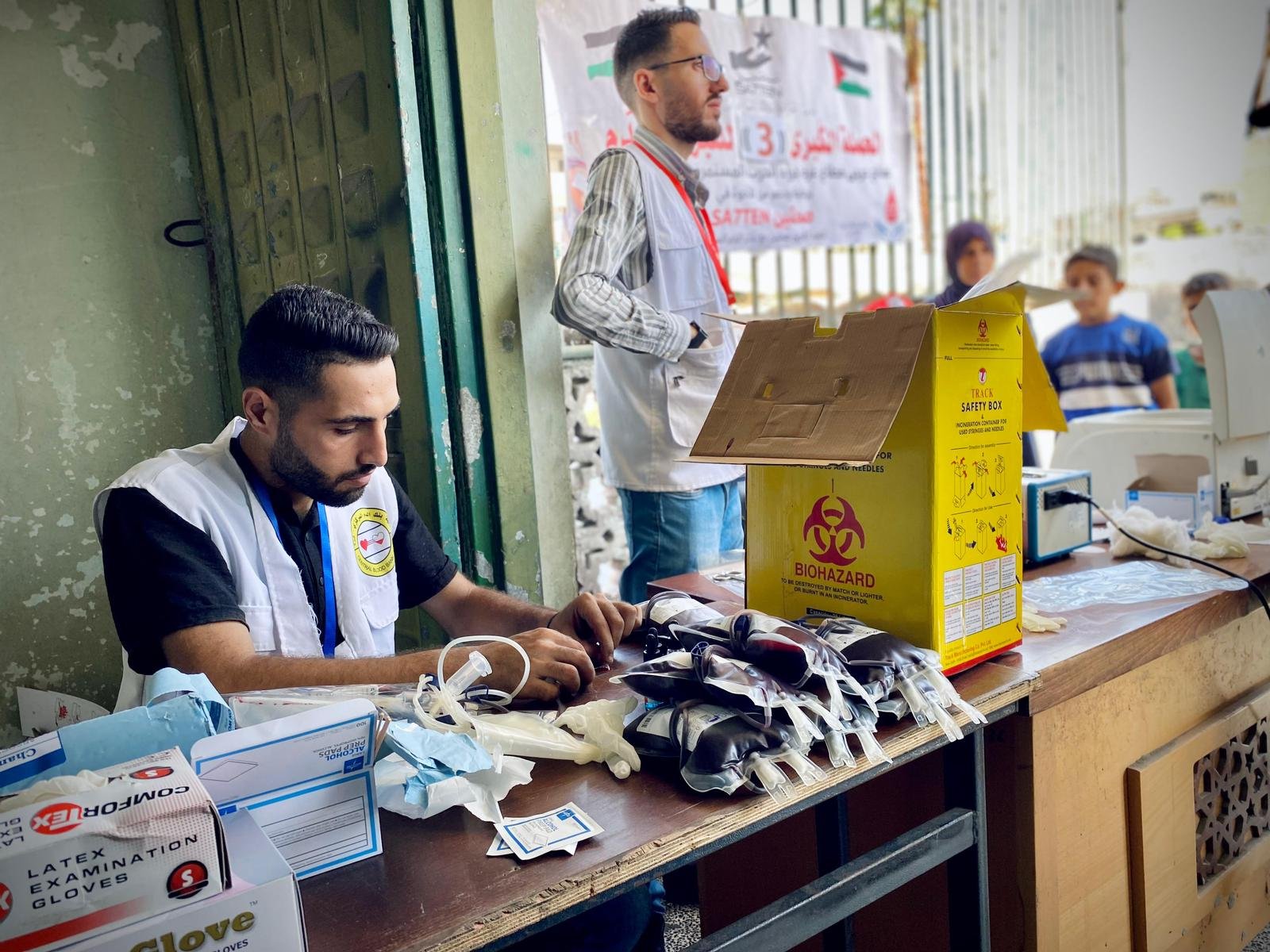
This is not just a number. It is the measure of our people’s will to give, even when life itself is under siege. In mid-August, as bombs shook Gaza and the world turned away, Sa7ten worked with the Ministry of Health to organize two blood donation drives. The need was urgent, hospitals overwhelmed with wounded, shelves empty of supplies, and every delay costing lives.
Donors lined up in Al-Azhar Camp and at Al-Shafei School. Some were turned away because their blood levels were too low, their bodies already worn thin by hunger and deprivation. Still, more than 150 units of blood were collected in two days. An ambulance and a medical team stood ready; Sa7ten secured the spaces, distributed cards, and even prepared pastries to remind donors that their sacrifice was honored.
Just days later, on August 21, Sa7ten distributed 50 food parcels from our preparation site in Al-Azhar Camp. The parcels were not symbolic handouts, they were built to meet real hunger. Flour, rice, pasta, tomato sauce, and oil. Five items, because giving only flour to a family living in a tent would strip them of dignity. Around 40 - 45 families received support, most of them newly displaced and living in tents after their homes were destroyed.
Securing the flour was itself a struggle. For days, vendors promised sacks they did not deliver, holding onto goods to manipulate prices in a market distorted by siege and smuggling. The cost of seven sacks alone reached 3,500 shekels. Each tuk-tuk ride to transport supplies cost another 200. We made sure these parcels reached families when they needed them most.
Our people do not ask for pity. They ask that the world see clearly what is happening: a genocide, enabled by silence and fed by complicity. Every drop of blood donated, every sack of flour delivered, is a refusal of that system, a declaration that we remain. Sa7ten does this work not as outsiders, but as part of our people, carrying the same fears and the same hunger.
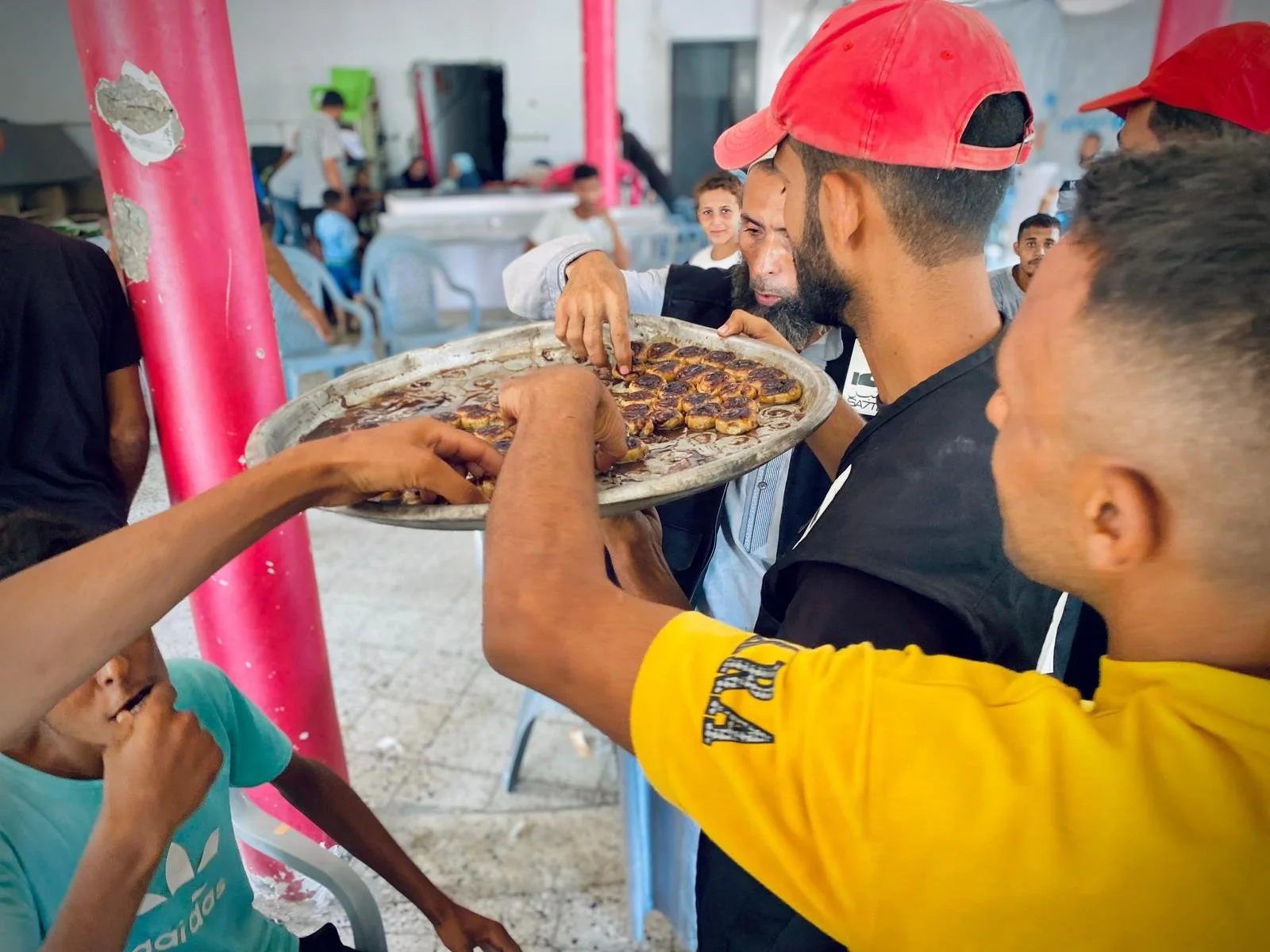
Behind every campaign is exhaustion and risk. Supplies are scarce, movement is dangerous, and our team works through the night to prepare and deliver. Yet stopping is not an option. Families expect us because we have been there before, even when nothing was left. “We will cook even under the tank gun,” our team says, because to disappear would be another form of death.
To those watching from afar, overwhelmed by helplessness: turn that weight into action. Share the truth. Support directly. Paralysis is part of the system; movement is resistance.
To international NGOs: your silence is complicity. Stop hiding behind procedures. Name the siege. Name COGAT. Name the genocide. Act now, not later.
To governments and institutions: this is not neutrality, it is complicity. Your weapons, your votes, your silence enable this settler-colonial project. Open the humanitarian corridors. Lift the siege. Halt your military support. If you claim humanity, act like it.